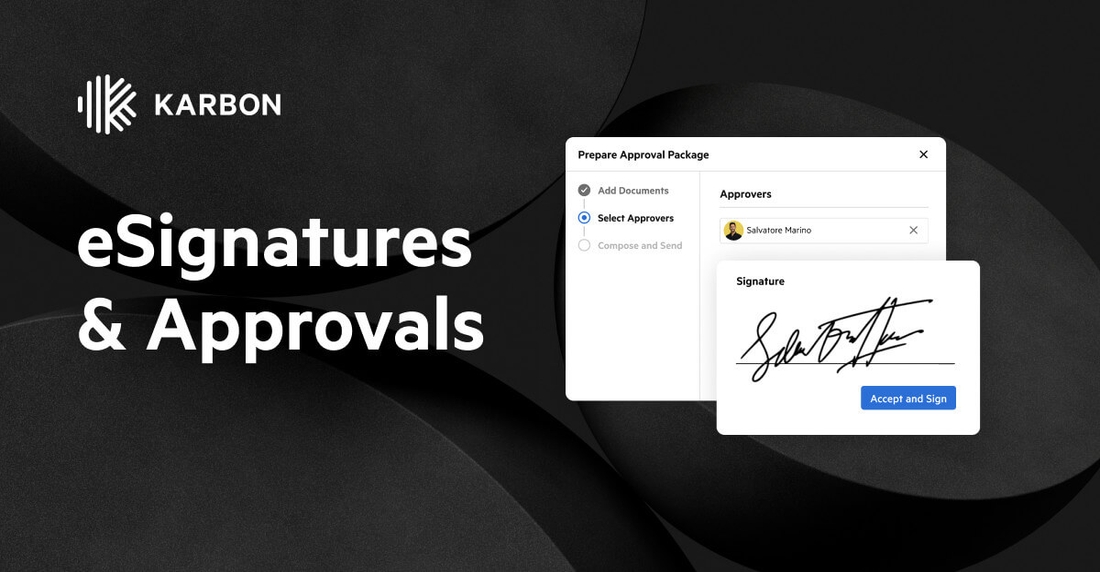
What Are eSignature & Digital Document Signing Platforms?
This category covers software used to digitally facilitate, execute, and manage the binding agreement process between multiple parties across the document lifecycle: capturing intent, verifying identity, securing document integrity, and maintaining audit trails. It sits between Document Generation (which focuses on creating content) and Contract Lifecycle Management (CLM) or Records Management (which focus on storage, obligation tracking, and compliance). It includes both general-purpose platforms suitable for HR and sales, and highly specialized, vertical-specific tools built for regulated industries like mortgage lending, healthcare, and tax preparation.
At its core, this software solves the "last mile" problem of business operations. While organizations have digitized communication (email, Slack) and data storage (cloud ERPs), the act of formal agreement often remains a friction point. These platforms replace wet ink, scanners, and couriers with cryptographic evidence that a specific individual consented to specific terms at a specific time. For the modern enterprise, this is not merely about saving paper; it is about accelerating revenue recognition, ensuring enforcing legal defensibility, and creating a structured data layer for organizational commitments.
History of the Category
While the theoretical mathematics of public-key cryptography existed earlier, the commercial eSignature category truly emerged in the late 1990s and early 2000s, driven by a critical gap between the rising adoption of email and the legal requirement for physical signatures. In the 1990s, as businesses moved from mainframes to desktop computing, the inability to sign a PDF created a "digital break." A contract could be drafted in seconds but took days to execute via fax or courier.
The legislative watershed moment arrived with the U.S. Electronic Signatures in Global and National Commerce (ESIGN) Act of 2000 and the Uniform Electronic Transactions Act (UETA), which gave digital signatures the same legal weight as wet ink. [1]. This legal validation spurred the first wave of vertical SaaS solutions, primarily focusing on simple, proprietary image stamping.
Between 2010 and 2015, the market experienced a significant consolidation wave and a shift from on-premise servers to cloud-native platforms. Early buyers were satisfied with a digital database of signed PDFs. However, as mobile adoption surged, buyer expectations shifted from "digital filing" to "anywhere access." The introduction of the European Union's eIDAS regulation in 2014 (effective 2016) forced vendors to mature rapidly, distinguishing between Simple Electronic Signatures (SES) and Qualified Electronic Signatures (QES) which require higher identity assurance levels.
Today, the market has evolved from static document repositories to active intelligence engines. The COVID-19 pandemic acted as a forced accelerator, normalizing remote execution even in highly regulated sectors like real estate and notary services. Modern expectations have now moved beyond simple execution; buyers demand "actionable intelligence"—platforms that not only capture a signature but trigger downstream workflows, verify biometric identity in real-time, and utilize AI to analyze risk within the agreement before it is signed.
What to Look For
When evaluating eSignature platforms, the technical nuance often lies in the balance between user experience and forensic defensibility. A tool that is too frictionless may fail in court; a tool that is too secure may be abandoned by clients.
Critical Evaluation Criteria:
- Identity Assurance Levels: Does the platform support tiered authentication? For an internal HR policy, a simple email click (Simple Electronic Signature) is sufficient. For a cross-border commercial lease, you may need Two-Factor Authentication (2FA), Knowledge-Based Authentication (KBA), or a Qualified Electronic Signature (QES) that requires a digital certificate issued by a Trust Service Provider.
- The "Tamper-Evident" Seal: It is not enough to just paste an image of a signature on a PDF. The software must apply a cryptographic hash to the document immediately upon signing. If a single pixel of the document is altered post-signature, the seal must break, alerting all parties.
- Workflow Logic: Look for conditional routing capabilities. Can the system automatically route a document to a Legal VP only if the contract value exceeds $50,000? Can it facilitate parallel signing (everyone signs at once) vs. sequential signing (ordered hierarchy)?
Red Flags and Warning Signs:
- Proprietary Lock-in: Avoid vendors that store the audit trail separately from the document. The best practice is an embedded audit trail within the PDF metadata, ensuring that if you leave the vendor, your legal proof leaves with you.
- Opaque Pricing on "Envelopes": Many vendors sell packages based on "envelopes" (sent documents). Be wary of "fair use" policies on unlimited plans that throttle sending speeds after a certain threshold, or aggressive overage fees that kick in without warning.
- Lack of Regional Compliance: If you operate globally, a tool compliant only with US ESIGN/UETA may be legally void in the EU (eIDAS) or Brazil (ICP-Brasil).
Key Questions to Ask Vendors:
- "Does your audit trail travel with the document as embedded metadata, or does it live exclusively on your server?"
- "How do you handle 'blended' workflows where one signer is remote and another is in-person (IPEN)?"
- "What is your specific uptime SLA for the API, not just the web interface?"
Industry-Specific Use Cases
Retail & E-commerce
In retail, speed and volume are the primary drivers. The focus is rarely on high-assurance identity verification for complex contracts, but rather on reducing friction for high-volume, low-risk interactions. The two dominant use cases are high-volume HR onboarding for seasonal staff and vendor agreements. Retailers often need to onboard thousands of temporary employees in weeks; a friction-heavy login process results in candidate drop-off. Consequently, mobile-first responsiveness is the most critical evaluation metric—if a candidate cannot sign an offer letter on a smartphone in under 60 seconds, the software has failed. Additionally, bulk sending features (one click to send the same policy update to 5,000 employees) are mandatory.
Healthcare
Healthcare usage is defined by the strict boundaries of HIPAA (in the U.S.) and patient privacy. Unlike retail, convenience cannot come at the cost of compliance. The paramount evaluation priority is the Business Associate Agreement (BAA). If a vendor will not sign a BAA, they are non-starters for any patient-facing workflow. Unique needs include "bedside mode" where a tablet is handed to a patient for intake forms without exposing the rest of the system, and integration with Electronic Health Records (EHR) systems [2]. Security protocols must ensure that completed documents are not stored indefinitely in the signing platform but are immediately wiped after secure transfer to the patient's record.
Financial Services
Financial institutions require the highest tiers of identity verification, known as Know Your Customer (KYC) and Anti-Money Laundering (AML) compliance. A simple email link is insufficient for loan origination or account opening. Buyers in this sector prioritize platforms that integrate with third-party identity databases (e.g., pulling data from credit bureaus or scanning government IDs) directly within the signing flow [3]. Audit trails here must be exhaustive, capturing not just the IP address but the exact duration the document was viewed. "Hybrid" workflows are also common, where a digital process must seamlessly transition to a wet-ink requirement for certain legacy regulatory filings.
Manufacturing
Manufacturing workflows center on supply chain integrity and the Bill of Lading. The complexity here is often jurisdictional; a manufacturer in Germany shipping to a distributor in Brazil requires a signature that is valid in both legal systems. E-signatures in this sector often need to support "digital seals" for corporate entity signing (rather than individual signing). Speed is critical to avoid demurrage charges (fees for cargo sitting at a port). Research indicates that e-signatures facilitate more efficient communication across the supply chain, reducing delays in logistics agreements and quality assurance documents [4]. Offline capabilities are also frequently requested for field agents signing receipts in warehouses with poor connectivity.
Professional Services
For law firms, consultancies, and agencies, the eSignature platform is part of the "cash conversion cycle." The primary use cases are Engagement Letters and Statements of Work (SOW). The evaluation priority is heavily weighted toward "redlining" and negotiation features. Unlike a standard HR form, these documents change frequently before signing. Tools that allow for version control and collaborative editing before the signature field is applied are highly valued. Professional services firms also heavily scrutinize the branding experience; the signing interface must look like a seamless extension of the firm, not a third-party vendor site, to maintain client trust.
Subcategory Overview
eSignature & Document Approval Platforms for Real Estate Agents
Real estate is distinct because the "document" is rarely a standalone file; it is part of a complex, multi-party transaction governed by strict local association rules. General-purpose tools often fail here because they lack integration with Multiple Listing Services (MLS) and transaction management backends. This niche requires software that can auto-populate data from an MLS listing directly into a contract, minimizing manual entry errors that could invalidate a sale [5]. The specific workflow that only these tools handle well is the "packet" creation where state-mandated disclosure forms are automatically bundled with purchase agreements based on the property's zip code. Agents flock to eSignature & Document Approval Platforms for Real Estate Agents because generic platforms cannot automatically update forms when state laws change, leaving agents liable.
eSignature & Document Approval Platforms for Mortgage Brokers
The mortgage sector demands a level of identity assurance that exceeds standard real estate needs. The differentiator here is Remote Online Notarization (RON) capability. While a general tool allows a signature, mortgage-specific tools support a live audio-video session where a commissioned notary witnesses the signing digitally, recording the session for evidence [6]. The workflow unique to this niche is the "hybrid closing," where the majority of a 100-page loan packet is e-signed in advance, leaving only the promissory note and notarized documents for a brief in-person or RON session. Buyers choose eSignature & Document Approval Platforms for Mortgage Brokers to reduce the "time-to-close" and prevent funding delays caused by missing signatures on critical lender documents.
eSignature & Document Approval Platforms for Accountants
Accountants face a specific federal hurdle in the United States: IRS compliance for e-filing authorization (Form 8879). Generic platforms often fail to meet the Knowledge-Based Authentication (KBA) standards required by the IRS, where the signer must answer personal history questions (e.g., "Which bank holds your 2018 auto loan?") within a time limit. Specialized tools for accountants integrate this KBA check directly into the flow [7]. Furthermore, these tools manage the specific workflow of "K-1 distribution"—securely sending individual tax forms to hundreds of partners in an investment fund, a task that is a logistical nightmare with standard bulk-send tools. Firms utilize eSignature & Document Approval Platforms for Accountants to ensure they don't jeopardize their Electronic Return Originator (ERO) status with the IRS.
eSignature & Document Approval Platforms for Marketing Agencies
Marketing agencies care less about "legal binding" and more about "creative approval." The pain point driving buyers here is the inability of standard e-sign tools to handle visual feedback. A generic tool expects a text document; marketing tools allow clients to annotate a video frame or a high-resolution image proof directly before signing off [8]. The workflow unique to this niche is "version comparison approval," where a client signs off that Version 3 matches their requested edits from Version 2. Agencies select eSignature & Document Approval Platforms for Marketing Agencies to avoid the endless email chains of "is this the final final version?" and to secure clear IP transfer rights upon payment.
eSignature & Document Approval Platforms for Contractors
For construction contractors, the document workflow is tied directly to cash flow via "Lien Waivers." A generic e-signature tool treats a lien waiver like any other contract, but specialized tools understand the dependency between payment and signature. They handle "Conditional Lien Waivers," where the signature is only valid once payment is received. This niche software often includes GPS tagging to prove a supervisor was physically on the job site when approving a change order, a feature rarely found elsewhere [9]. Contractors rely on eSignature & Document Approval Platforms for Contractors to automate the exchange of rights for checks, speeding up the payment cycle in a low-margin industry.
Integration & API Ecosystem
In the enterprise stack, an eSignature platform is rarely a destination; it is a pass-through utility. The value of the platform is directly correlated to how well it disappears into existing systems like Salesforce, Workday, or SAP. A robust API ecosystem allows a document to be triggered, populated, sent, signed, and filed without a human ever logging into the eSignature console. According to SNS Insider, organizations utilizing integrated eSignature workflows report an average cost reduction of 56% by eliminating manual handling steps [10].
Real-World Scenario: Consider a 50-person professional services firm. They use a CRM for sales, a separate tool for invoicing, and a project management system for delivery. Without tight integration, when a Master Services Agreement (MSA) is signed, an account manager must manually download the PDF, upload it to the project folder, and email finance to unlock the invoice. In a well-integrated ecosystem, the "Signed" status webhook from the eSignature API instantly triggers three actions: the CRM opportunity moves to "Closed-Won," the project management system creates the onboarding board, and the invoicing software generates the deposit bill. When integrations are poorly designed, data latency occurs—finance doesn't know the deal is signed for three days, delaying cash flow.
Security & Compliance
Security in this category is two-fold: protecting the document from tampering and protecting the identity of the signer. Compliance is moving beyond simple audit trails to rigorous identity proofing. Forrester Research highlights a concerning trend: consumer trust in tech companies regarding biometric data security has plummeted from 28% in 2022 to just 5% in 2024 [11]. This signals that while biometric verification (face scans, fingerprints) is technically superior, user resistance is growing, forcing firms to balance security with comfort.
Real-World Scenario: A regional bank wants to digitize loan applications. They implement a high-friction process requiring a video selfie and ID scan for every signer. While secure, they notice a 40% drop-off rate because applicants are uncomfortable sharing biometric data with a third-party vendor they don't recognize. A balanced security approach would use tiered compliance: simple 2FA (SMS code) for the initial application, reserving the biometric check only for the final promissory note. This "step-up" authentication satisfies the risk team without destroying the conversion rate.
Pricing Models & TCO
Pricing is the most opaque aspect of this category. The market generally splits between "Per User/Seat" and "Per Envelope/Transaction." Per-seat models are predictable but penalize large teams with low volume. Per-envelope models scale with usage but can lead to shock overage fees. Hidden costs often lurk in "premium" features: SMS delivery, KBA identity checks, and API calls are often billed as separate add-ons. Gartner analysts warn that organizations often overbuy, purchasing "unlimited" plans that actually have fair-use caps, or buying expensive enterprise tiers for users who send one document a month.
Real-World Scenario: Imagine a 25-person real estate team. A "Per Seat" plan at $40/user/month costs $12,000 annually. However, only 5 top agents send 90% of the contracts; the other 20 are admin staff or junior agents who sign but rarely send. A "Per Envelope" model might cost $4 per envelope. If the team sends 2,000 envelopes a year, the cost is $8,000—a 33% saving. However, if that team scales to 5,000 envelopes, the transaction model suddenly costs $20,000. Calculating Total Cost of Ownership (TCO) requires analyzing not just headcount, but the velocity of transactions per head.
Implementation & Change Management
The technology is often the easy part; the human element is where projects stall. McKinsey and BCG research consistently indicates that up to 70% of digital transformation initiatives fail to meet their objectives, often due to resistance to change rather than software defects [12]. Implementation is not just about setting up templates; it is about mapping the legal signing authority within an organization and digitizing that hierarchy.
Real-World Scenario: A manufacturing firm implements a new eSignature platform to speed up vendor contracts. They set it up technically in a week. However, they failed to account for their internal "delegation of authority" policy, which requires the CFO's countersignature on anything over $100k. The digital workflow was set to "Sales Manager" only. The result? Three months of contracts were signed by unauthorized managers, creating a massive compliance liability that had to be manually remediated. Successful implementation requires "process mapping" sessions before a single account is provisioned.
Vendor Evaluation Criteria
Beyond the feature checklist, buyers must evaluate the vendor's ecosystem viability and support structure. In a commoditized market, support becomes a key differentiator. Does the vendor offer 24/7 phone support, or only email tickets with a 48-hour SLA? IDC notes that signing is "just one part of the overall digital transaction workflow," implying that vendors should be evaluated on their ability to handle the before (document gen) and after (archival) of the process [13].
Real-World Scenario: An insurance brokerage evaluates Vendor A and Vendor B. Both have identical signing features. Vendor A is cheaper but has a proprietary API. Vendor B is 20% more expensive but has a native, pre-built connector for the brokerage's specific Agency Management System (AMS). The brokerage chooses Vendor A to save money on licenses. Six months later, they have spent $50,000 on custom development to get the API to talk to their AMS, wiping out any license savings. The correct evaluation criterion was not "price per seat," but "cost of connectivity."
Emerging Trends and Contrarian Take
Emerging Trends 2025-2026:
- Identity Wallets & Decentralized ID: We are moving away from signing with an email address toward signing with a reusable "Identity Wallet" (like the EU Digital Identity Wallet). This shifts control from the platform to the user.
- AI-Agent Negotiation: Gartner predicts that by 2028, AI agents will intermediate significant B2B buying [14]. We will see eSignature platforms where an AI reviews the contract, suggests redlines, and even "signs" on behalf of the entity based on pre-set parameters.
- Smart Contract Convergence: The static PDF is slowly being replaced by "computable contracts" or smart contracts that self-execute (e.g., releasing payment automatically upon signature).
Contrarian Take:
The "Enterprise" tier is a trap for the mid-market. Most organizations pay a 300% premium for features like "advanced QES" or "blockchain hashing" that they will never legally require. For 95% of US commercial transactions, a basic audit trail is legally indistinguishable from a bank-grade digital certificate. Companies are massively over-insuring against a legal risk (non-repudiation) that rarely materializes in court, while under-investing in the actual bottleneck: the internal approval workflow before the signature. The future isn't "more secure signatures"; it's eliminating the need for a signature entirely for low-risk internal approvals.
Common Mistakes
Overbuying Compliance Levels: Many US-based buyers panic and purchase eIDAS Qualified Electronic Signatures (QES) for domestic employment contracts. This adds unnecessary friction (requiring ID verification) and cost. Understanding your jurisdictional requirement is vital.
Ignoring the "signer experience": Buyers often test the sending experience but ignore the signing experience. If your platform requires a client to create an account, remember a password, or download an app just to sign one document, your completion rates will plummet. The "account-less" signing experience is a mandatory requirement for B2C use cases.
Poor Change Management: A common failure mode is deploying the tool without updating the underlying policy. If the Employee Handbook still says "submit signed forms to the tray," employees will print the e-signed document and put it in a tray, defeating the purpose. Policy must update alongside software.
Questions to Ask in a Demo
- "Can you show me exactly what my customer sees on a mobile device? I want to see the 'pinch and zoom' experience."
- "What happens to my data if I cancel my subscription? Do I get a readable export of all audit trails, or just raw JSON data?"
- "Show me how to correct a document that has been sent but not signed. Do I have to void it and start over, or can I edit in flight?"
- "Is your integration 'native' (built by you) or maintained by a third party? Who do I call if the integration breaks—you or them?"
- "Do you support 'witness signing' flows where a second party must be physically present?"
Before Signing the Contract
Final Decision Checklist:
- Pilot Test: Have you run a live document through the system with a non-technical user?
- Compliance Check: Does the platform meet the specific regulatory standards of your industry (HIPAA, 21 CFR Part 11, etc.)?
- Exit Strategy: Do you have a contractual guarantee on data portability upon termination?
Negotiation Points:
- Price Protection: Ask for a cap on renewal price increases (e.g., no more than 3-5%).
- Overage Buffer: If buying an envelope plan, negotiate a buffer (e.g., no fees until 10% over the limit) to account for seasonality.
- Sandbox Access: Ensure a developer sandbox is included for free so you can test integrations without burning live envelopes.
Deal-Breakers:
- Lack of a downloadable, independent audit trail certificate.
- Forced account creation for your clients/signers.
- Inability to support Single Sign-On (SSO) if you are an enterprise buyer.
Closing
The transition to eSignature platforms is a foundational step in modernizing business operations. It provides security, speed, and efficiency that paper simply cannot match. However, the market is crowded with vendors offering varying levels of compliance and complexity. By focusing on your specific industry needs—whether that is HIPAA compliance in healthcare or RON in mortgage lending—and rigorously testing the integration capabilities, you can select a partner that drives genuine ROI rather than just digitizing a filing cabinet. If you have further questions or need help navigating the specific nuances of your use case, feel free to reach out.
Email: albert@whatarethebest.com