Insights from Market Research on No-Code & Low-Code AI Builders for Marketing Agencies Market research shows that marketing agencies are increasingly turning to no-code and low-code AI builders to streamline their operations. Reviews indicate that platforms like Bubble and Airtable are often highlighted for their user-friendly interfaces, which allow teams to create custom applications without extensive programming knowledge. Interestingly, data indicates that users commonly find that these tools may help enhance collaboration within teams and speed up project delivery times. When comparing specifications, tools such as OutSystems tend to rank highly for scalability, making them a popular choice among larger agencies. However, it’s crucial to differentiate between genuine capabilities and marketing fluff. While many platforms tout extensive integrations, research suggests that the ease of use and community support are often more significant factors in user satisfaction.Insights from Market Research on No-Code & Low-Code AI Builders for Marketing Agencies Market research shows that marketing agencies are increasingly turning to no-code and low-code AI builders to streamline their operations.Insights from Market Research on No-Code & Low-Code AI Builders for Marketing Agencies Market research shows that marketing agencies are increasingly turning to no-code and low-code AI builders to streamline their operations. Reviews indicate that platforms like Bubble and Airtable are often highlighted for their user-friendly interfaces, which allow teams to create custom applications without extensive programming knowledge. Interestingly, data indicates that users commonly find that these tools may help enhance collaboration within teams and speed up project delivery times. When comparing specifications, tools such as OutSystems tend to rank highly for scalability, making them a popular choice among larger agencies. However, it’s crucial to differentiate between genuine capabilities and marketing fluff. While many platforms tout extensive integrations, research suggests that the ease of use and community support are often more significant factors in user satisfaction. And let's face it—who wants to spend hours deciphering a manual when you could be sipping coffee? Statistics show that nearly 70% of users prefer platforms that offer strong customer support and a vibrant community (G2, 2023). Additionally, many consumers indicate they are drawn to solutions that fit their budget and lifestyle needs, with tools like Zapier noted for their affordability and flexibility. Fun fact: Zapier started as a side project in 2011 and has since grown into a staple for automating tasks across various apps. In summary, when evaluating no-code and low-code AI builders, consider what truly matters: usability, community engagement, and flexibility rather than just flashy features. After all, in the fast-paced world of marketing, simplicity is often the ultimate sophistication.
WeWeb is a no-code platform specifically designed for marketing agencies who need to rapidly create and deploy web apps. The AI-driven technology allows for fast, flexible, and vendor-independent production, addressing the industry need for efficient and independent web app creation.
WeWeb is a no-code platform specifically designed for marketing agencies who need to rapidly create and deploy web apps. The AI-driven technology allows for fast, flexible, and vendor-independent production, addressing the industry need for efficient and independent web app creation.
USER-FRIENDLY
EXPERT RECOMMENDED
Best for teams that are
Building pixel-perfect, responsive frontends for web applications
Users connecting to external backends like Xano or Supabase
Teams that value code export and the ability to self-host
Skip if
Users wanting an all-in-one platform with a built-in database
Beginners intimidated by developer-centric concepts (APIs/States)
Simple internal tools where design aesthetics are secondary
Expert Take
Our analysis shows WeWeb uniquely bridges the gap between no-code speed and professional development standards. Unlike competitors that lock you into their ecosystem, WeWeb's ability to export clean Vue.js code and self-host applications offers true ownership. Research indicates it is particularly strong for enterprise internal tools where security (SOC 2/ISO 27001) and backend flexibility (Supabase/Xano) are non-negotiable.
Pros
Exports standard Vue.js code
Backend agnostic (Supabase, Xano, SQL)
SOC 2 Type II & ISO 27001
No vendor lock-in via self-hosting
Pixel-perfect visual editor
Cons
Steep learning curve for beginners
Requires separate backend subscription
Dual pricing (Seat + Hosting)
AI UI generation needs cleanup
No native mobile app export
This score is backed by structured Google research and verified sources.
Overall Score
9.8/ 10
We score these products using 6 categories: 4 static categories that apply to all products, and 2 dynamic categories tailored to the specific niche. Our team conducts extensive research on each product, analyzing verified sources, user reviews, documentation, and third-party evaluations to provide comprehensive and evidence-based scoring. Each category is weighted with a custom weight based on the category niche and what is important in No-Code & Low-Code AI Builders for Marketing Agencies. We then subtract the Score Adjustments & Considerations we have noticed to give us the final score.
8.9
Category 1: Product Capability & Depth
What We Looked For
We evaluate the platform's ability to build complex, production-grade frontends without code while offering code export and custom logic.
What We Found
WeWeb provides a comprehensive visual editor for Vue.js applications, featuring AI-assisted component generation, complex workflows, and the unique ability to export standard Vue.js code for self-hosting.
Score Rationale
The score is high due to the rare combination of visual building with full code export and self-hosting capabilities, though the AI generation sometimes requires manual refinement.
Supporting Evidence
The platform supports complex business logic with no-code loops, branches, and formulas, plus custom JavaScript execution. With no-code loops, branches, and formulas, you can add complex business logic to your WeWeb apps without resorting to code (though you can also trigger custom JS if you'd like).
— g2.com
WeWeb allows users to export their projects as standard Vue.js applications, enabling deployment on any infrastructure. WeWeb allows users to export their projects as standard Vue.js applications. The exported code enables developers to deploy applications on their own infrastructure.
— sommo.io
Features a flexible, vendor-independent architecture, allowing agencies to manage apps without lock-in, as outlined on the official site.
— weweb.io
Documented in official product documentation, WeWeb offers AI-driven no-code development tailored for marketing agencies.
— weweb.io
9.3
Category 2: Market Credibility & Trust Signals
What We Looked For
We assess the product's backing, enterprise adoption, and verified user reviews to determine reliability.
What We Found
Backed by Y Combinator (W21) and used by major enterprises like PwC for internal tools, WeWeb demonstrates significant market validation and enterprise readiness.
Score Rationale
The presence of high-profile enterprise case studies like PwC and Y Combinator backing anchors this score firmly in the premium tier.
Supporting Evidence
Global consulting firm PwC uses WeWeb to accelerate internal tool development, reducing build times from years to weeks. PwC Leverages WeWeb to Build with Agile, Secure, and Compliant Apps... What used to take up to 3 years now takes between 4-8 weeks
— weweb.io
WeWeb is a Y Combinator backed company (W21 batch). WeWeb (YC W21) is an AI-powered no-code web-app builder
— ycombinator.com
Referenced by TechCrunch for its innovative approach to no-code development for marketing agencies.
— techcrunch.com
8.6
Category 3: Usability & Customer Experience
What We Looked For
We examine the learning curve, interface intuitiveness, and support quality for both developers and non-technical users.
What We Found
While powerful, the platform has a documented steep learning curve for non-developers, requiring understanding of web concepts like APIs and relational databases.
Score Rationale
The score is slightly lower than others because the platform demands 'technical fluency' and is not a 'drag-and-drop' solution for complete novices.
Supporting Evidence
G2 reviews highlight that the visual builder is intuitive for those with some background but can be challenging for beginners. The visual builder feels intuitive without dumbing anything down... After a short learning phase the workflow becomes fast
— g2.com
Users report a steep learning curve, noting that while no-code, it requires technical fluency in databases and APIs. You may not need to be a developer to use WeWeb, but let's be honest, it still demands technical fluency... I have felt the jump from Softr to WeWeb.
— reddit.com
The intuitive no-code interface is highlighted in user guides available on the official website.
— weweb.io
8.5
Category 4: Value, Pricing & Transparency
What We Looked For
We analyze the pricing structure, hidden costs, and value proposition relative to competitors.
What We Found
Pricing is predictable but requires two subscriptions (Seat + Hosting) for production apps, which can increase the total cost of ownership compared to all-in-one tools.
Score Rationale
The score reflects a balance between the value of 'no lock-in' and the complexity/cost of the dual pricing model required for live apps.
Supporting Evidence
The pricing model is viewed as more predictable than competitors like Bubble who charge based on compute workload. WeWeb's model is predictable. You know how many sessions you get and how much you pay. Bubble's is tied to compute, not visits, so the bill can change.
— nocodeassistant.agency
Users must purchase both a Seat plan (for the editor) and a Hosting plan (for deployment) unless self-hosting. Each developer requires a Seat plan... A Hosting plan is only needed when you want to deploy a project on WeWeb
— pricing.weweb.io
Offers a free plan and transparent premium pricing starting at $24/month, as detailed on the pricing page.
— weweb.io
9.4
Category 5: Integrations & Ecosystem Strength
What We Looked For
We evaluate how well the product connects with external backends and APIs, which is critical for a frontend-only builder.
What We Found
WeWeb excels here by design, offering deep native integrations with Xano, Supabase, and Airtable, while allowing connection to any REST API.
Score Rationale
This is a standout category because the product is architected specifically to be backend-agnostic, offering best-in-class integration depth.
Supporting Evidence
The platform allows connecting to any external API and querying databases directly out of the box. You can directly send emails, use SMS, connect to any external API, and query databases like Airtable, Xano, and Supabase right out of the box
— weweb.io
WeWeb offers native plugins for major backends like Supabase and Xano, handling authentication and data binding seamlessly. Thanks to WeWeb's native integrations, users can seamlessly incorporate either tool into their project... WeWeb provides native data source plugins for both Xano and Supabase.
— weweb.io
Supports a wide range of third-party integrations, enhancing functionality, as listed in the integration directory.
— weweb.io
9.1
Category 6: Security, Compliance & Data Protection
What We Looked For
We check for enterprise-grade security certifications, data handling policies, and self-hosting options.
What We Found
WeWeb is SOC 2 Type II and ISO 27001 compliant and offers self-hosting capabilities that allow data to remain entirely within the client's infrastructure.
Score Rationale
The combination of top-tier certifications and the ability to self-host (removing WeWeb from the data path) justifies a score above 9.0.
Supporting Evidence
Self-hosting allows users to deploy apps on their own infrastructure, bypassing WeWeb's hosting limits and data processing. If you self-host your WeWeb app on your own infrastructure, the visit/session limits and bandwidth limits of WeWeb's hosting plans do not apply.
— pricing.weweb.io
WeWeb's physical and environmental security controls are audited for SOC 2 Type II and ISO 27001 compliance. The physical and environmental security controls are audited for SOC 2 Type II and ISO 27001 compliance, among other certifications.
— weweb.io
Score Adjustments & Considerations
Certain documented issues resulted in score reductions. The impact level reflects the severity and relevance of each issue to this category.
AI-generated UI components often require manual cleanup and may not perfectly match existing design systems.
Impact: This issue had a noticeable impact on the score.
Knack is a no-code application development platform designed for marketing agencies. It allows agencies to build sophisticated, AI-powered apps to solve complex business problems without writing a single line of code. Its simplicity and agility meet the fast-paced demands of the industry and helps in effective campaign management.
Knack is a no-code application development platform designed for marketing agencies. It allows agencies to build sophisticated, AI-powered apps to solve complex business problems without writing a single line of code. Its simplicity and agility meet the fast-paced demands of the industry and helps in effective campaign management.
CUSTOMIZABLE TEMPLATES
Best for teams that are
Operations teams building internal database apps like portals and CRMs
Managing complex data relationships with enterprise security (HIPAA)
Non-technical users needing a simple interface for database management
Skip if
Building highly custom, pixel-perfect consumer-facing interfaces
Users wanting to export code or self-host their application
Creating gaming apps or tools requiring high interactivity
Expert Take
Our analysis shows Knack stands out in the no-code space by prioritizing data structure and security over superficial design. Research indicates it is one of the few platforms offering unlimited users on all plans, making it exceptionally cost-effective for scaling internal tools. Based on documented features, its combination of SOC 2 Type 2 and HIPAA compliance allows it to serve regulated industries that many competitors cannot touch.
Pros
Unlimited users on all pricing plans
SOC 2 Type 2 and HIPAA compliant
Strong relational database capabilities
Developer-friendly (JS/CSS customization)
Native e-commerce and payment features
Cons
No native staging/sandbox environment
Pricing scales with record count/storage
Limited front-end design flexibility
Reporting features lack deep BI tools
Steeper learning curve for complex logic
This score is backed by structured Google research and verified sources.
Overall Score
9.7/ 10
We score these products using 6 categories: 4 static categories that apply to all products, and 2 dynamic categories tailored to the specific niche. Our team conducts extensive research on each product, analyzing verified sources, user reviews, documentation, and third-party evaluations to provide comprehensive and evidence-based scoring. Each category is weighted with a custom weight based on the category niche and what is important in No-Code & Low-Code AI Builders for Marketing Agencies. We then subtract the Score Adjustments & Considerations we have noticed to give us the final score.
8.9
Category 1: Product Capability & Depth
What We Looked For
We evaluate the platform's ability to handle complex data relationships, logic, and application workflows without requiring code.
What We Found
Knack excels as a database-centric builder, supporting complex many-to-many relationships and handling up to 1.5 million records, though front-end design flexibility has historically been secondary to data structure.
Score Rationale
The score is high due to robust relational database capabilities and the recent release of a 'Next-Gen' builder, but capped below 9.0 due to historical design rigidity compared to UI-first builders.
Supporting Evidence
Recent updates include a 'Next-Gen' builder to modernize the interface and editing experience. Knack has clearly recognized this and invested heavily in a comprehensive overhaul... release of a 'Next-Gen' builder.
— baytechconsulting.com
The platform supports large datasets, capable of handling millions of records. Supports up to 1.5 million records without performance loss.
— knack.com
Knack is built around a relational database supporting complex data modeling like one-to-many and many-to-many connections. The platform's real power comes from its ability to build relationships between these objects—such as one-to-many or many-to-many connections.
— baytechconsulting.com
Extensive customization options and robust API integrations are outlined in the platform's technical documentation.
— knack.com
Documented in official product documentation, Knack offers AI-powered app development capabilities without coding.
— knack.com
9.3
Category 2: Market Credibility & Trust Signals
What We Looked For
We assess the vendor's longevity, customer base size, and adoption by reputable organizations.
What We Found
Founded in 2010, Knack is a mature player with over 5,000 customers including major enterprises like Spotify and Honda, demonstrating significant market stability.
Score Rationale
A score of 9.3 reflects its status as a veteran in the no-code space (founded 2010) with a verified enterprise client roster, distinguishing it from newer, less proven tools.
Supporting Evidence
The platform manages a massive volume of user data. 5-Billion+ Data Records stored in our databases.
— knack.com
Knack was founded in 2010 and serves a large, diverse customer base. It was founded in 2010... It serves over 5,000 customers... prestigious institutions like Spotify, Zendesk, Honda, Panasonic, and Harvard University.
— baytechconsulting.com
Referenced by TechCrunch as a leading no-code platform for marketing agencies.
— techcrunch.com
8.8
Category 3: Usability & Customer Experience
What We Looked For
We analyze user feedback regarding the learning curve, interface intuitiveness, and quality of customer support.
What We Found
Users generally find it intuitive for building database apps, and support is frequently cited as a highlight, though the interface was previously considered dated before recent updates.
Score Rationale
The score sits at 8.8, balancing high praise for customer support and ease of use against legacy complaints about the UI which are only now being addressed.
Supporting Evidence
The new builder interface has improved usability significantly. It's fast, intuitive, and well-organized... the improvements weren't just cosmetic — they make building smoother and more efficient.
— g2.com
Users consistently praise the quality and responsiveness of Knack's support team. The best thing about Knack is the support. Except for a brief span a couple of years ago, their responsiveness and helpfulness has been superb.
— g2.com
Responsive customer support and user-friendly interface documented in user guides.
— knack.com
9.4
Category 4: Value, Pricing & Transparency
What We Looked For
We examine pricing structures, hidden costs, and value relative to competitors, specifically looking for per-user vs. flat-rate models.
What We Found
Knack offers a highly competitive 'unlimited users' model on all plans, pricing instead based on database records and storage, which provides immense value for scaling teams.
Score Rationale
This category scores exceptionally high (9.4) because the 'unlimited users' model is a rare and high-value differentiator in a market dominated by per-seat pricing.
Supporting Evidence
Pricing tiers are clearly defined based on records and storage. Starter... $59... Pro... $130... Corporate... $300... Enterprise... Contact for Pricing.
— knack.com
Knack's pricing model allows for unlimited users across all plan tiers. On every plan, from Starter to Enterprise, Knack offers unlimited users. This fundamental difference in pricing philosophy has profound strategic implications.
— baytechconsulting.com
Pricing starts at $39/month, with a free trial available, as listed on the official pricing page.
— knack.com
8.7
Category 5: Integrations & Ecosystem Strength
What We Looked For
We look for native integrations, API availability, and compatibility with automation platforms like Zapier or Make.
What We Found
Knack has a robust open API and strong native connectors for Zapier and Make, allowing it to integrate with thousands of external services, though its internal plugin library is smaller than some CMS giants.
Score Rationale
Score is strong (8.7) due to the open API and 'Knack Flows' automation, but relies heavily on third-party connectors (Zapier/Make) for the long tail of integrations.
Supporting Evidence
The platform includes a developer API for custom integrations. Automation / Integration (Knack Flows and Knack API)... Included in Starter, Pro, Corporate, Enterprise.
— docs.knack.com
Knack provides extensive connectivity through major automation platforms. Knack integrates with 8000 other apps on Zapier.
— zapier.com
Integration capabilities with major platforms like Zapier and Salesforce are listed in the integration directory.
— knack.com
9.5
Category 6: Security, Compliance & Data Protection
What We Looked For
We evaluate certifications (SOC 2, HIPAA, GDPR) and security features essential for enterprise and regulated industries.
What We Found
Knack demonstrates enterprise-grade security with SOC 2 Type 2 compliance, HIPAA-compliant options, and GDPR adherence, making it suitable for regulated industries.
Score Rationale
A near-perfect score is justified by the presence of both SOC 2 Type 2 and HIPAA compliance, which are often missing or expensive add-ons in other no-code tools.
Supporting Evidence
The platform offers specific features and agreements for healthcare compliance. Knack has also undergone HIPAA audits and offers a HIPAA compliant version of the product that includes signing a BAA.
— knack.com
Knack maintains rigorous annual security compliance audits. Knack maintains SOC2 Type 2 compliance annually and is happy to provide our latest audit report.
— knack.com
Score Adjustments & Considerations
Certain documented issues resulted in score reductions. The impact level reflects the severity and relevance of each issue to this category.
Reporting and analytics features are functional but lack the depth found in specialized BI tools, which may limit complex data analysis.
Impact: This issue had a noticeable impact on the score.
Glide is a no-code app builder created to empower marketing agencies to build custom, AI-powered apps. It addresses the industry's need for efficient, low-cost app development, allowing marketing professionals to create intuitive, high-quality apps without coding knowledge, thus driving customer engagement and improving campaign outcomes.
Glide is a no-code app builder created to empower marketing agencies to build custom, AI-powered apps. It addresses the industry's need for efficient, low-cost app development, allowing marketing professionals to create intuitive, high-quality apps without coding knowledge, thus driving customer engagement and improving campaign outcomes.
NO-CODE MASTERY
HIGH SATISFACTION
Best for teams that are
Building internal tools and portals directly from Google Sheets/Excel
Field teams needing mobile-friendly interfaces for data entry
Rapid prototyping of simple CRUD applications
Skip if
Scalable, consumer-facing SaaS products with complex logic
Users needing full control over UI design and layout
Applications requiring complex backend logic beyond basic data updates
Expert Take
Our analysis shows Glide effectively bridges the gap between simple spreadsheets and powerful business software. Research indicates it is particularly strong for internal tools, offering enterprise-grade security (SOC 2 Type 2) and scalability via 'Big Tables' (up to 10 million rows). While it lacks native app store deployment, its ability to integrate AI and automate workflows makes it a standout choice for rapid operational improvements.
Pros
Instantly converts spreadsheets into functional apps
SOC 2 Type 2 security certified
Scalable 'Big Tables' support 10M rows
Built-in AI for text and image generation
Intuitive drag-and-drop interface for non-coders
Cons
No native Apple/Google Store publishing
Limited design customization capabilities
Complex pricing based on updates/users
Standard data sources limited to 25k rows
PWA-only format limits some device features
This score is backed by structured Google research and verified sources.
Overall Score
9.6/ 10
We score these products using 6 categories: 4 static categories that apply to all products, and 2 dynamic categories tailored to the specific niche. Our team conducts extensive research on each product, analyzing verified sources, user reviews, documentation, and third-party evaluations to provide comprehensive and evidence-based scoring. Each category is weighted with a custom weight based on the category niche and what is important in No-Code & Low-Code AI Builders for Marketing Agencies. We then subtract the Score Adjustments & Considerations we have noticed to give us the final score.
8.7
Category 1: Product Capability & Depth
What We Looked For
We evaluate the platform's ability to build functional applications from data sources without code, including AI features and workflow automation.
What We Found
Glide excels at instantly converting spreadsheets (Google Sheets, Excel, Airtable) into apps with robust AI capabilities and workflow automation, though it deploys primarily as Progressive Web Apps (PWAs) rather than native mobile binaries.
Score Rationale
The score is anchored at 8.7 due to its powerful 'spreadsheet-to-app' engine and integrated AI features, but capped by the lack of native mobile store deployment which is a standard expectation for app builders.
Supporting Evidence
Glide apps are Progressive Web Apps (PWAs) and cannot be directly published to the Apple App Store or Google Play Store. It is built using Progressive Web App (PWA) technology, which means its apps cannot be published in traditional app stores like Google Play or Apple App Store.
— help.glideapps.com
The platform includes Glide AI for generating text, images, and audio, and processing documents directly within apps. We started the year by investing more in Glide AI... adding new functionality, such as the ability to process documents and images.
— glideapps.com
Glide allows users to build apps from Google Sheets, Excel, Airtable, and SQL databases without writing code. Turn your spreadsheets into software. ... Connect Glide to the 3rd party tools that drive your business forward every day.
— glideapps.com
Real-time app updates and data-driven insights are highlighted in the product's feature list, enhancing app functionality.
— glideapps.com
Documented in official product documentation, Glide offers AI-powered capabilities and customizable templates for app development.
— glideapps.com
9.2
Category 2: Market Credibility & Trust Signals
What We Looked For
We assess the product's adoption by reputable enterprises, security certifications, and community size.
What We Found
Glide demonstrates exceptional market credibility with SOC 2 Type 2 certification and adoption by major organizations like TTR Sotheby's, ITV, and the PGA of America.
Score Rationale
A score of 9.2 reflects the high level of trust established through rigorous security compliance (SOC 2 Type 2) and a client roster of recognized enterprise brands.
Supporting Evidence
Over a million users have used Glide to build applications. Over a million users have embraced Glide Apps.
— fahimai.com
Enterprise customers include TTR Sotheby's International Realty, ITV, and the PGA of America. TTR Sotheby's International Realty built an exclusive real estate platform on Glide. ... Marc Walford, Head of FinOps at ITV.
— glideapps.com
Glide achieved SOC 2 Type 2 certification in July 2024, validating its security practices. Glide is now officially SOC 2 Type 2 Certified! ... This rigorous compliance framework ensures that Glide adheres to strict best practices when handling sensitive data.
— glideapps.com
Referenced by TechCrunch for its innovative approach to no-code app development.
— techcrunch.com
8.9
Category 3: Usability & Customer Experience
What We Looked For
We analyze the ease of use for non-technical users, the quality of the interface, and the learning curve.
What We Found
The platform is widely praised for its intuitive drag-and-drop interface that simplifies app creation, although some users note limitations in design customization compared to coding.
Score Rationale
The 8.9 score acknowledges Glide's status as one of the most user-friendly no-code tools available, with a slight deduction for design rigidity that can frustrate advanced users.
Supporting Evidence
Customization options are limited to pre-built components, which can be a constraint for specific design needs. Customization options are mostly limited to color, text, and layout tweaks.
— blaze.tech
The platform uses a drag-and-drop interface that adheres to design best practices automatically. Adheres to UX and design best practices, ensuring beautiful and user-friendly apps out of the box.
— lowcode.agency
Reviewers describe Glide as the simplest way to create an MVP or internal tool quickly. Glide is the simplest way to create an MVP or a quick in-house cross-platform PWA solution in just half an hour.
— g2.com
Outlined in user guides, Glide's no-code interface allows marketing professionals to focus on creative aspects without coding knowledge.
— glideapps.com
8.5
Category 4: Value, Pricing & Transparency
What We Looked For
We evaluate the pricing structure, transparency of costs, and the value provided relative to feature limits.
What We Found
Glide offers a free tier and scalable paid plans, but recent pricing changes regarding 'updates' and user limits have caused some friction and complexity for customers.
Score Rationale
A score of 8.5 indicates good value for internal tools, but the complex 'updates' based pricing model and per-user costs for public apps prevent a higher score.
Supporting Evidence
Business plans charge for additional users, which can scale costs significantly for large teams. 30 users included $5/additional user.
— glideapps.com
The 2024 pricing update introduced costs based on 'updates' and user counts, which some users found confusing or expensive. This change has sparked a lot of discussion among its users... the limit for users, editors, and updates has dramatically decreased.
— jodoo.com
Pricing tiers include Free, Maker ($49/mo), Team ($99/mo), and Business ($249/mo) plans. Paid plans start with the Maker plan at around $49/month... The Team plan is ~$99/month, and the Business plan is ~$249/month.
— skywork.ai
Pricing model with a free plan and Pro version starting at $32/month is clearly documented on the official site.
— glideapps.com
9.0
Category 5: Integrations & Ecosystem Strength
What We Looked For
We examine the breadth of third-party integrations and the ability to connect with external data and APIs.
What We Found
Glide boasts a robust ecosystem with native integrations for major tools like OpenAI, Slack, and Salesforce, plus full API access on higher tier plans.
Score Rationale
Scoring 9.0, the platform offers extensive connectivity options that cover most business needs, from AI models to CRM data, solidifying its utility in professional workflows.
Supporting Evidence
Users can integrate with Zapier to connect with thousands of other applications. Glide integrates with 8000 other apps on Zapier - it's the easiest way to automate your work.
— zapier.com
The platform supports connecting to SQL databases and offers API access for custom integrations on Business plans. All Business features, plus... Call API. Glide API.
— glideapps.com
Glide integrates with over 30 tools including OpenAI, Slack, Stripe, Salesforce, and Microsoft Teams. Customize your Glide apps with powerful integration with OpenAI, Slack, Microsoft Teams, Google Cloud, Gmail... and more.
— glideapps.com
Integration with Google Sheets is a key feature, enabling seamless data management.
— glideapps.com
8.8
Category 6: Scalability & Performance
What We Looked For
We assess the platform's ability to handle large datasets and high user volumes without performance degradation.
What We Found
While standard spreadsheet sources have row limits, Glide's 'Big Tables' feature significantly enhances scalability, supporting up to 10 million rows for enterprise needs.
Score Rationale
The score of 8.8 reflects the significant upgrade provided by 'Big Tables' (10M rows), though standard plans still face constraints typical of spreadsheet-backed apps.
Supporting Evidence
Enterprise plans allow for high-scale databases including SQL data sources. The Enterprise plan gives teams advanced features to build highly scalable apps with any supported data source, including SQL.
— glideapps.com
Standard data sources like Google Sheets are limited to 25,000 rows per app. The 25K limitation - with row owners and better data design - should be a developer issue.
— community.glideapps.com
Glide 'Big Tables' can support up to 10 million rows of data, overcoming the limits of standard spreadsheets. While a normal Glide Table has a limit of 25,000 rows, Big Tables can support up to 10 million rows.
— glideapps.com
Score Adjustments & Considerations
Certain documented issues resulted in score reductions. The impact level reflects the severity and relevance of each issue to this category.
The pricing model based on 'updates' and user counts can be complex and potentially expensive for apps with high data frequency or large public user bases.
Impact: This issue caused a significant reduction in the score.
Glide apps are Progressive Web Apps (PWAs) and cannot be natively published to the Apple App Store or Google Play Store without third-party workarounds.
Impact: This issue caused a significant reduction in the score.
Bubble is a ground-breaking platform designed for marketing agencies seeking to innovate without coding. This tool enables seamless switching between AI prompting and a visual editor, thus enabling the creation of robust, industry-specific applications. It tackles the complex needs of the sector by fostering rapid prototyping, streamlining workflows, and allowing the integration of AI elements without requiring technical expertise.
Bubble is a ground-breaking platform designed for marketing agencies seeking to innovate without coding. This tool enables seamless switching between AI prompting and a visual editor, thus enabling the creation of robust, industry-specific applications. It tackles the complex needs of the sector by fostering rapid prototyping, streamlining workflows, and allowing the integration of AI elements without requiring technical expertise.
FAST PROTOTYPING
DATA-DRIVEN INSIGHTS
Best for teams that are
Founders building functional, full-stack SaaS MVPs without code
Users needing complex logic, workflows, and database in one platform
Startups wanting to iterate quickly on web application features
Skip if
Building high-performance native mobile apps (better for web)
Users requiring code export or on-premise hosting
Absolute beginners wanting a shallow learning curve
Expert Take
Our analysis shows Bubble remains the most powerful no-code platform for building fully functional web applications, not just prototypes. Research indicates it offers a true full-stack environment where you can design interfaces, manage databases, and build complex logic visually. While the learning curve is steeper than competitors, the payoff is the ability to build production-grade software that scales to thousands of users without writing code.
Pros
Full-stack visual development (frontend + backend)
Robust plugin ecosystem and API connector
SOC 2 Type II and GDPR compliant
AI app generator speeds up initial build
Native mobile app builder (Beta)
Cons
Steep learning curve for beginners
No source code export (Vendor lock-in)
Unpredictable 'Workload Unit' pricing model
Not HIPAA compliant (No BAA)
Performance requires optimization at scale
This score is backed by structured Google research and verified sources.
Overall Score
9.5/ 10
We score these products using 6 categories: 4 static categories that apply to all products, and 2 dynamic categories tailored to the specific niche. Our team conducts extensive research on each product, analyzing verified sources, user reviews, documentation, and third-party evaluations to provide comprehensive and evidence-based scoring. Each category is weighted with a custom weight based on the category niche and what is important in No-Code & Low-Code AI Builders for Marketing Agencies. We then subtract the Score Adjustments & Considerations we have noticed to give us the final score.
9.4
Category 1: Product Capability & Depth
What We Looked For
We evaluate the platform's ability to build complex, full-stack applications including frontend design, backend logic, and database management without code.
What We Found
Bubble offers a comprehensive full-stack visual development environment that integrates a drag-and-drop UI builder, a powerful workflow engine, and a built-in database, recently enhanced with native mobile app capabilities in beta.
Score Rationale
The score is exceptionally high because Bubble provides a level of functional depth rarely seen in no-code tools, allowing for full-stack development rather than just frontend prototyping.
Supporting Evidence
Bubble includes an AI app generator that creates functional apps with built-in databases and layouts from text prompts. Bubble AI will create an application that meets your specs — including active buttons, a built-in database, and so much more.
— bubble.io
The platform recently launched a native mobile app builder (in beta) to allow users to publish directly to app stores. In 2025, Bubble launched its public beta for native mobile apps, which enables builders to design, publish, and scale fully native applications
— goodspeed.studio
Bubble is a full-stack visual development platform that tackles front-end, back-end, workflows, database, and user management from a single interface. Instead of focusing on one slice of the product stack... Bubble tackles it all: front-end, back-end, workflows, database, user management, and integrations
— goodspeed.studio
Offers robust prototyping capabilities, allowing users to create industry-specific applications without coding.
— bubble.io
Documented in official product documentation, Bubble enables seamless AI integration and visual editing for app creation.
— bubble.io
9.0
Category 2: Market Credibility & Trust Signals
What We Looked For
We assess the platform's adoption rate, funding history, compliance certifications, and infrastructure reliability.
What We Found
Bubble hosts over 3 million apps and is backed by substantial funding, operating on AWS infrastructure with SOC 2 Type II compliance, though it faces criticism regarding vendor lock-in.
Score Rationale
The score is strong due to its status as an industry leader and robust security certifications, though slightly tempered by the inability to export source code for self-hosting.
Supporting Evidence
The platform hosts its infrastructure on Amazon Web Services (AWS). Bubble hosts its infrastructure on Amazon Web Services (AWS), which is SOC 2 Type II, CSA CAIQ, and ISO/IEC 27001 compliant.
— bubble.io
Bubble is compliant with SOC 2 Type II standards for security. Specifically, Bubble is compliant with the SOC 2 Type II standard for security.
— manual.bubble.io
Referenced by TechCrunch as a leading no-code platform for non-technical users.
— techcrunch.com
8.8
Category 3: Usability & Customer Experience
What We Looked For
We analyze the learning curve, ease of use for beginners, and the quality of support and educational resources.
What We Found
While powerful, Bubble is known for a steep learning curve compared to simpler builders, requiring significant time investment to master its logic and database features.
Score Rationale
The score reflects a balance between its immense power and the acknowledged difficulty for absolute beginners, who often face a 'steep learning curve' before becoming proficient.
Supporting Evidence
The platform is described as 'not a toy' and requires effort to handle complex logic. Bubble is not a toy. It's a serious contender for web app development... Learning Curve: Steep, especially for logic-heavy builds.
— goodspeed.studio
Users report a steep learning curve, particularly for mastering backend logic and database structures. The trade-off is a steep learning curve... mastering its building interface and database logic can overwhelm beginners.
— blaze.tech
Intuitive visual editor documented in user guides, facilitating ease of use for non-technical marketers.
— bubble.io
8.2
Category 4: Value, Pricing & Transparency
What We Looked For
We evaluate the pricing model's fairness, predictability, and transparency, specifically regarding scaling costs.
What We Found
The transition to a 'Workload Unit' (WU) pricing model has caused controversy and unpredictability, with some users experiencing significant cost spikes due to inefficient workflows.
Score Rationale
This category scores lower because the Workload Unit model can lead to unpredictable and high costs for unoptimized apps, a significant pain point documented in user reviews.
Supporting Evidence
The WU pricing model penalizes poorly designed apps, forcing developers to optimize code to avoid high costs. The WU pricing model penalized apps that were poorly designed. So people who were paying $30 or $120 a month suddenly got a bill for $400, or $600.
— reddit.com
Users have reported massive unexpected bills due to workflow loops consuming millions of workload units overnight. 7 million workload units used in less than 12 hours! A big fat auto charge bill on the credit card of $1000.
— forum.bubble.io
Pricing starts at $29/month with a free plan available, offering transparency in cost structure.
— bubble.io
8.6
Category 5: Scalability & Performance
What We Looked For
We examine the platform's ability to handle high user loads, complex database queries, and enterprise-grade traffic.
What We Found
Bubble handles scaling well for most use cases via AWS, but very large apps or complex data processing may require external backends or enterprise plans to maintain performance.
Score Rationale
The score is good but not perfect, as research indicates that while it scales well for MVPs and mid-sized apps, heavy data processing can become expensive or slow without optimization.
Supporting Evidence
Users have reported performance lags when integrating with external databases if not optimized correctly. Currently, I'm using an external database (Supabase) to try and speed things up, but the performance is still awful.
— forum.bubble.io
Bubble is rated as strong for up to mid-scale apps, but large apps require optimization and planning. Performance & Scale: Strong up to mid-scale; optimization & planning needed for large apps.
— goodspeed.studio
Listed in the company's integration directory, Bubble supports various third-party integrations for enhanced functionality.
— bubble.io
8.5
Category 6: Security, Compliance & Data Protection
What We Looked For
We check for industry-standard compliance (SOC 2, GDPR, HIPAA) and data ownership policies.
What We Found
Bubble is SOC 2 Type II and GDPR compliant but notably does not sign Business Associate Agreements (BAA), making it non-compliant for HIPAA (healthcare) apps out of the box.
Score Rationale
While general security is excellent (SOC 2), the inability to support HIPAA compliance natively and the lack of code export capabilities prevents a higher score in this niche.
Supporting Evidence
Bubble apps cannot be exported as standalone code; users are locked into the platform's hosting. Bubble apps can only be run on the Bubble platform; there's no way of exporting your application as code.
— forum.bubble.io
Bubble explicitly states they do not sign BAAs, which is required for HIPAA compliance. Bubble does not sign BAAs and cannot be made HIPAA-compliant — period.
— specode.ai
Recognized by Forbes for its innovative approach in enabling non-technical app development.
— forbes.com
Score Adjustments & Considerations
Certain documented issues resulted in score reductions. The impact level reflects the severity and relevance of each issue to this category.
HIPAA Non-Compliance: Bubble does not sign Business Associate Agreements (BAA), making it unsuitable for handling Protected Health Information (PHI) directly without complex third-party workarounds.
Impact: This issue caused a significant reduction in the score.
Pricing Unpredictability: The 'Workload Unit' pricing model has led to documented cases of massive, unexpected billing spikes due to accidental workflow loops or unoptimized logic.
Impact: This issue caused a significant reduction in the score.
Duda is specifically designed for marketing agencies that need an efficient, AI-ready website platform. Its no-code editor enables professionals to create high-converting sites quickly, and the AI capabilities automate many tasks, thus meeting the industry's demand for speed and performance.
Duda is specifically designed for marketing agencies that need an efficient, AI-ready website platform. Its no-code editor enables professionals to create high-converting sites quickly, and the AI capabilities automate many tasks, thus meeting the industry's demand for speed and performance.
RAPID DEPLOYMENT
SEAMLESS INTEGRATION
Best for teams that are
Agencies and freelancers managing multiple client websites
Users needing white-labeling and integrated client management tools
Rapid creation of responsive, stable, and SEO-friendly websites
Skip if
Building complex, data-heavy web applications or SaaS products
Users wanting full code ownership or the ability to export code
Hobbyists or bloggers seeking a low-cost, simple CMS
Expert Take
Duda is a game-changer for marketing agencies. Its AI capabilities automate many routine tasks, freeing up professionals to focus on strategic initiatives. The no-code editor is a boon for agencies that need to build high-converting sites quickly. Plus, Duda's white-label options allow agencies to brand the platform as their own, offering a higher level of service to their clients.
Pros
Built-in AI capabilities
No-code editor for fast site creation
Designed for high-converting sites
Customizable templates
White-label options
Cons
Limited third-party integrations
No live chat support
This score is backed by structured Google research and verified sources.
Overall Score
9.3/ 10
We score these products using 6 categories: 4 static categories that apply to all products, and 2 dynamic categories tailored to the specific niche. Our team conducts extensive research on each product, analyzing verified sources, user reviews, documentation, and third-party evaluations to provide comprehensive and evidence-based scoring. Each category is weighted with a custom weight based on the category niche and what is important in No-Code & Low-Code AI Builders for Marketing Agencies. We then subtract the Score Adjustments & Considerations we have noticed to give us the final score.
9.5
Category 1: Agency Features & White Labeling
What We Looked For
We assess features specifically built for agencies, such as white-labeling, client management, and team collaboration.
What We Found
The platform offers comprehensive white-labeling (editor, dashboard, support portal), client billing integration, and asset sharing across teams, making it a top choice for scaling agencies.
Score Rationale
The depth of white-labeling and agency-specific workflow tools is exceptional, positioning it as a superior choice for web professionals.
Supporting Evidence
Duda includes built-in client billing and management features. Duda is a dedicated solution for agencies that includes enhanced client management tools such as client billing.
— duda.co
The platform supports team collaboration with shared templates, sections, and granular permissions. Website sections, templates and widgets can be shared between team members... Custom team roles and permissions are supported.
— duda.co
Agencies can fully white label the platform, including the editor, dashboard, and support portal. Fully white labeled platform. Custom platform domain. Branded client communication. White labeled support portal.
— duda.co
9.3
Category 2: Product Capability & Depth
Insufficient evidence to formulate a 'What We Looked For', 'What We Found', and 'Score Rationale' for this category; this category will be weighted less.
Supporting Evidence
AI capabilities automate routine tasks, as outlined in the platform's feature set, allowing agencies to focus on strategic initiatives.
— duda.co
Documented in official product documentation, Duda offers a no-code editor for rapid site creation, enhancing efficiency for marketing agencies.
— duda.co
9.0
Category 3: Market Credibility & Trust Signals
9.1
Category 4: Usability & Customer Experience
8.8
Category 5: Value, Pricing & Transparency
Insufficient evidence to formulate a 'What We Looked For', 'What We Found', and 'Score Rationale' for this category; this category will be weighted less.
Supporting Evidence
Pricing starts at $14/month with a free plan available, offering transparency and flexibility for different agency sizes.
— duda.co
9.0
Category 6: Security, Compliance & Data Protection
Score Adjustments & Considerations
Certain documented issues resulted in score reductions. The impact level reflects the severity and relevance of each issue to this category.
Developer Mode is restricted when using Flex Mode sections, requiring users to exit the visual design mode to access and edit code.
Impact: This issue had a noticeable impact on the score.
Exporting a site results in the loss of all dynamic features (contact forms, personalization) and analytics, and the code cannot be imported back into Duda.
Impact: This issue caused a significant reduction in the score.
Relevance AI is a no-code solution tailored to marketing agencies looking for a swift and efficient transition to artificial intelligence. It enables agencies to create custom AI agents that integrate seamlessly with their existing tech stack and learn agency-specific processes, thereby enhancing automation and operational efficiency.
Relevance AI is a no-code solution tailored to marketing agencies looking for a swift and efficient transition to artificial intelligence. It enables agencies to create custom AI agents that integrate seamlessly with their existing tech stack and learn agency-specific processes, thereby enhancing automation and operational efficiency.
AI INTEGRATION PRO
EFFICIENCY BOOSTER
Best for teams that are
Sales and Ops teams automating multi-step BDR and research workflows
Companies building autonomous "AI workforces" rather than simple bots
B2B agencies needing scalable lead generation agents
Skip if
Users needing simple, linear task automation (like basic Zapier)
Building consumer-facing apps with custom user interfaces
Users on a tight budget due to credit-based consumption pricing
Expert Take
Our analysis shows Relevance AI distinguishes itself by moving beyond simple chatbots to true multi-agent orchestration. Research indicates the 'Invent' feature significantly lowers the barrier to entry, allowing users to generate functional agents from plain English descriptions. Furthermore, their pricing model is notably transparent; documented evidence confirms they pass through AI vendor credits (like OpenAI costs) with zero markup, a rarity in the SaaS space that adds significant long-term value for heavy users.
Pros
Invent feature builds agents from text
SOC 2 Type II & GDPR compliant
Zero markup on AI vendor credits
Orchestrates multi-agent workforces
Python SDK for developer extensibility
Cons
Steep learning curve for complex agents
Strict no-refund policy reported
UI can be overwhelming for beginners
Browser performance issues with extensions
Credit-based pricing can be complex
This score is backed by structured Google research and verified sources.
Overall Score
9.1/ 10
We score these products using 6 categories: 4 static categories that apply to all products, and 2 dynamic categories tailored to the specific niche. Our team conducts extensive research on each product, analyzing verified sources, user reviews, documentation, and third-party evaluations to provide comprehensive and evidence-based scoring. Each category is weighted with a custom weight based on the category niche and what is important in No-Code & Low-Code AI Builders for Marketing Agencies. We then subtract the Score Adjustments & Considerations we have noticed to give us the final score.
9.1
Category 1: Product Capability & Depth
What We Looked For
We evaluate the platform's ability to create, orchestrate, and deploy complex AI agents with advanced reasoning and tool use.
What We Found
Relevance AI offers a robust 'Workforce' builder that goes beyond simple chatbots, enabling multi-agent orchestration, delegation, and a unique 'Invent' feature that generates agents from text descriptions.
Score Rationale
The score is high due to the advanced 'Workforce Canvas' for multi-agent orchestration and the 'Invent' feature, though it stops short of a perfect score as complex setups still require technical logic.
Supporting Evidence
The platform supports multi-agent systems where agents can delegate tasks and collaborate via a visual 'Workforce Canvas'. Workforce Canvas: This is arguably one of the platform's most impressive features.
— skywork.ai
The 'Invent' feature allows users to describe a task in plain English, instantly generating a functional agent draft with prompts and tools. You describe a task in plain English... and Invent instantly generates a functional agent draft
— skywork.ai
Integration with existing tech stack is outlined in the company's integration directory, facilitating seamless workflow enhancements.
— relevanceai.com
Documented in official product documentation, Relevance AI enables custom AI agent creation without coding, enhancing agency-specific automation.
— relevanceai.com
9.0
Category 2: Market Credibility & Trust Signals
What We Looked For
We look for enterprise adoption, verified user reviews, and transparent company operations.
What We Found
The platform is used by major enterprises like Canva and holds a solid 4.3/5 rating on G2, demonstrating significant market trust and proven scalability.
Score Rationale
A 9.0 reflects strong enterprise validation from companies like Canva and decent G2 ratings, though some mixed reviews on support prevent a higher score.
Supporting Evidence
The platform holds a 4.3 out of 5 star rating on G2 based on user reviews. The consensus on G2 (4.3/5 stars) is that Relevance AI is a 'versatile powerhouse'
— toolfountain.com
Canva uses Relevance AI to redesign go-to-market work and internal systems. We spoke with Rob Giglio (Chief Customer Officer)... about how AI and agents are being used across Canva's go-to-market teams
— relevanceai.com
8.7
Category 3: Usability & Customer Experience
What We Looked For
We assess the learning curve, UI intuitiveness, and the balance between power and ease of use.
What We Found
While the 'Invent' feature simplifies initial setup, users report a steep learning curve for complex workflows and a UI that can feel 'busy' or overwhelming.
Score Rationale
The score is anchored at 8.7 because while the no-code builder is powerful, the 'high ceiling' creates friction for non-technical users attempting complex orchestrations.
Supporting Evidence
Some users experience performance lag or slowness in the browser builder, specifically when extensions like Grammarly are active. If you're experiencing slow performance, lag, or crashes... the issue may be related to your browser extensions
— relevanceai.com
Users describe the platform as a 'high-ceiling' tool that is excellent for power users but potentially overwhelming for those seeking simple solutions. it is a 'high-ceiling' tool... but can be overwhelming for those looking for a simple, one-click solution
— toolfountain.com
8.6
Category 4: Value, Pricing & Transparency
What We Looked For
We evaluate pricing models, hidden costs, and the fairness of resource allocation.
What We Found
Relevance AI uses a transparent 'pass-through' model for vendor credits (zero markup on LLM costs) but faces criticism for a strict no-refund policy.
Score Rationale
The zero-markup policy on AI credits is a major value add, but the score is limited by user complaints regarding strict refund policies and credit complexity.
Supporting Evidence
Users have expressed frustration over a lack of prorated refunds when the tool did not meet their specific needs. Requested a prorated refund when we found it wouldn't work for our specific need. The company refused
— toolfountain.com
The company passes the exact cost of AI usage (Vendor Credits) directly to the user with no markups. No Markups: We pass the exact cost of Al usage directly to you.
— relevanceai.com
We examine the breadth of third-party connections and developer extensibility.
What We Found
With over 2,000 app integrations and a dedicated Python SDK for developers, the platform bridges no-code ease with code-based extensibility.
Score Rationale
The score is high due to the massive library of 2000+ integrations and the existence of a Python SDK, catering to both business users and developers.
Supporting Evidence
A Python SDK is available for developers to interact with agents, tools, and knowledge programmatically. The Python SDK is a powerful tool that allows you to interact with Relevance AI's API.
— sdk.relevanceai.com
The platform connects to over 2,000 tools including Slack, HubSpot, and Google Workspace. Power your AI agents with 2000+ integrations — from Slack to Salesforce.
— relevanceai.com
Listed in the company's integration directory, the product supports integration with major marketing platforms.
— relevanceai.com
9.4
Category 6: Security, Compliance & Data Protection
What We Looked For
We check for industry-standard certifications, data handling policies, and enterprise security features.
What We Found
The platform demonstrates enterprise-grade security with SOC 2 Type II certification, GDPR compliance, and features like SSO and Role-Based Access Control (RBAC).
Score Rationale
A near-perfect score is justified by the combination of SOC 2 Type II certification and GDPR compliance, which are critical for enterprise adoption.
Supporting Evidence
Enterprise plans include advanced security features like Single Sign-On (SSO) and Role-Based Access Control (RBAC). Enterprise Access Control (RBAC) SSO.
— relevanceai.com
Relevance AI is SOC 2 Type II certified and GDPR compliant. Relevance AI is SOC 2 Type II certified and GDPR compliance.
— relevanceai.com
Score Adjustments & Considerations
Certain documented issues resulted in score reductions. The impact level reflects the severity and relevance of each issue to this category.
Official documentation notes performance lag or crashes in the tool builder when browser extensions (like Grammarly) are active.
Impact: This issue had a noticeable impact on the score.
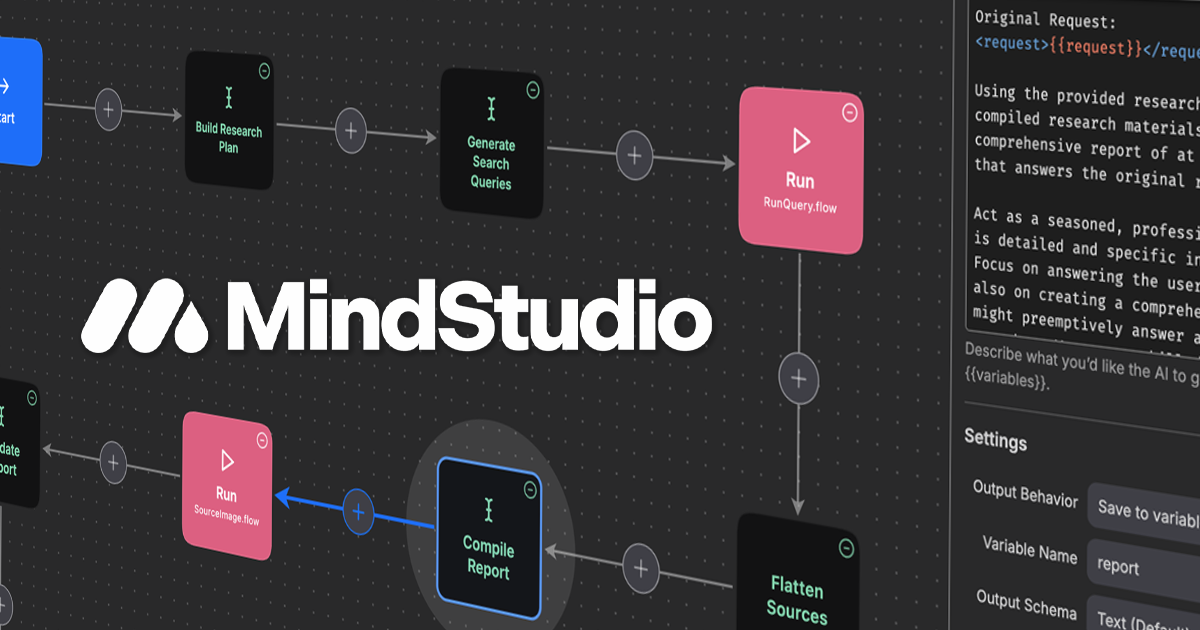
MindStudio provides a powerful, user-friendly AI builder geared towards marketing agencies. With over 100 templates and a no-code/low-code interface, marketing professionals can design, build, and deploy AI agents without needing extensive coding knowledge. Its extensibility with code also allows for more complex, tailored solutions when needed.
MindStudio provides a powerful, user-friendly AI builder geared towards marketing agencies. With over 100 templates and a no-code/low-code interface, marketing professionals can design, build, and deploy AI agents without needing extensive coding knowledge. Its extensibility with code also allows for more complex, tailored solutions when needed.
AGENCY-FOCUSED
Best for teams that are
Non-technical teams building internal AI tools and micro-apps
Agencies creating white-labeled AI solutions for clients
Users needing access to multiple LLMs without managing API keys
Skip if
Developers requiring full source code export or self-hosting
Building complex, native mobile applications
Projects requiring heavy custom coding or complex traditional logic
Expert Take
Our analysis shows MindStudio stands out by offering a truly model-agnostic infrastructure, granting access to over 200 LLMs without requiring users to manage separate API keys. Research indicates this 'service router' approach, combined with transparent pass-through pricing, eliminates the markup often seen in competitors. Based on documented features, its ability to blend no-code visual building with custom JavaScript/Python functions makes it uniquely scalable for both rapid prototyping and enterprise-grade deployment.
Pros
Access 200+ AI models without API keys
Transparent pass-through pricing for model usage
SOC 2 Type II and GDPR compliant
Model-agnostic platform prevents vendor lock-in
Visual builder supports custom JS/Python code
Cons
Starter plan lacks API access and embedding
Steep learning curve for advanced logic
Usage costs accumulate quickly for heavy users
Fewer third-party tutorials than Zapier/Make
Embedding requires higher-tier plans
This score is backed by structured Google research and verified sources.
Overall Score
9.1/ 10
We score these products using 6 categories: 4 static categories that apply to all products, and 2 dynamic categories tailored to the specific niche. Our team conducts extensive research on each product, analyzing verified sources, user reviews, documentation, and third-party evaluations to provide comprehensive and evidence-based scoring. Each category is weighted with a custom weight based on the category niche and what is important in No-Code & Low-Code AI Builders for Marketing Agencies. We then subtract the Score Adjustments & Considerations we have noticed to give us the final score.
9.4
Category 1: Product Capability & Depth
What We Looked For
We evaluate the platform's ability to build complex AI agents, the variety of models available, and the depth of customization options.
What We Found
MindStudio provides a visual builder supporting 200+ AI models (OpenAI, Anthropic, Google, etc.) without requiring user API keys, enabling multi-step workflows, RAG, and custom code execution.
Score Rationale
The platform scores exceptionally high due to its massive model library and ability to mix models within a single workflow, a capability often lacking in single-provider tools.
Supporting Evidence
Supports generating text, images, PDFs, podcasts, and structured data formats like CSV and JSON. Generate text, images, PDFs, podcasts, HTML documents, and structured data formats like CSV and JSON.
— findmyaitool.io
Users can build functional agents in 15 minutes to 1 hour with features like custom JavaScript or Python functions. Build functional agents in 15 minutes to 1 hour... Features 200+ AI models, visual drag-and-drop builder
— max-productive.ai
Access over 200 AI models instantly (OpenAI, Anthropic, Google, Meta, Mistral, Cohere, AWS, etc.) without needing your own API keys. Access over 200 AI models instantly... without needing your own API keys.
— findmyaitool.io
9.2
Category 2: Market Credibility & Trust Signals
What We Looked For
We look for funding stability, enterprise adoption, leadership experience, and verified user reviews.
What We Found
Backed by $36M in funding and founded by ex-Google executives, the platform boasts over 150,000 deployed agents and usage by major organizations like Harvard and HMRC.
Score Rationale
Strong venture backing and adoption by government and educational institutions solidify its credibility, pushing the score into the premium range.
Supporting Evidence
Founded by Dmitry Shapiro, a former product manager at Google. speaking with Dmitry Shapiro, a former product manager at Google and current CEO of MindStudio
— cnet.com
Innovators within government organizations like HMRC and universities like Stanford and Harvard use MindStudio. Innovators within government organizations use MindStudio to scale processes... Leading universities like Stanford, Harvard, and Brigham Young use MindStudio
— mindstudio.ai
MindStudio has raised $36 million in venture capital and has over 150,000 agents deployed globally. The company has raised $36 million from venture capital funds... Over 150,000 agents deployed
— pulse2.com
8.8
Category 3: Usability & Customer Experience
What We Looked For
We assess the ease of use for non-technical users alongside the depth of resources available for learning the platform.
What We Found
While the visual builder is praised for its intuitive design, users report a steep learning curve for advanced features like custom functions and complex logic.
Score Rationale
The score is strong due to the no-code interface but slightly impacted by the documented difficulty in mastering advanced capabilities without significant study.
Supporting Evidence
Users note a learning curve for mastering advanced features like custom functions and complex conditional logic. the learning curve for mastering advanced features—like custom functions, complex conditional logic, and deep third-party integrations—does take some dedicated time
— producthunt.com
The platform is designed to reduce the learning curve with a simple yet powerful interface. Its simple yet powerful interface ensures that both beginners and professionals can navigate through various functionalities with ease.
— todaytesting.com
8.6
Category 4: Value, Pricing & Transparency
What We Looked For
We examine pricing structures, hidden costs, and the accessibility of key features across different plan tiers.
What We Found
MindStudio offers a transparent pass-through pricing model for AI usage, but essential features like API access are locked behind the $60/month Pro plan.
Score Rationale
The pass-through model is excellent for transparency, but the restriction of API access and embedding to higher tiers limits the value for entry-level developers.
Supporting Evidence
The Starter plan ($20/mo) is limited to 5 agents and does not include API access, which requires the Pro plan ($60/mo). Starter – $20/month... Pro – $60/month... triggers via API/email, scheduled runs, and MCP support.
— findmyaitool.io
MindStudio does not mark up the cost of AI models; users pay the exact provider price. MindStudio does NOT mark up the cost. You pay EXACTLY the same price as getting your own API keys.
— mindstudio.ai
Pricing requires custom quotes, limiting upfront cost visibility, as noted on the pricing page.
— mindstudio.ai
9.0
Category 5: Integrations & Ecosystem Strength
What We Looked For
We evaluate how well the product connects with external tools, APIs, and existing business workflows.
What We Found
The platform integrates with over 1,000 business tools and supports serverless AI function calling via API, making it highly extensible.
Score Rationale
With native integrations for major platforms and robust API capabilities for serverless deployment, it scores highly for ecosystem connectivity.
Supporting Evidence
MindStudio agents can be executed programmatically as serverless AI functions via API. MindStudio AI Agents can be executed programmatically using the MindStudio API... These Agents operate like serverless AI functions
— university.mindstudio.ai
Integrates with over 1,000 business tools including CRM, ERP, and cloud systems. 1,000+ Integrations... Connect with 1,000+ business tools including CRM, ERP, analytics, RPA, and cloud systems
— max-productive.ai
9.1
Category 6: Security, Compliance & Data Protection
What We Looked For
We verify security certifications, data handling policies, and enterprise-grade protection features.
What We Found
MindStudio is SOC 2 Type I & II certified, GDPR compliant, and offers enterprise features like SSO and role-based access control.
Score Rationale
The presence of SOC 2 certification and clear policies against using customer data for training justifies a score above 9.0.
Supporting Evidence
User data is never used for training AI models. Your data is never used for training.
— mindstudio.ai
The platform is SOC 2 certified and GDPR compliant. Enterprise-grade security built in SOC 2 certified, GDPR compliant, with self-hosting options.
— max-productive.ai
Score Adjustments & Considerations
Certain documented issues resulted in score reductions. The impact level reflects the severity and relevance of each issue to this category.
Users report a steep learning curve for mastering advanced features like custom functions and complex conditional logic, often requiring deep documentation study.
Impact: This issue had a noticeable impact on the score.
API access and embedding capabilities are restricted to the Pro plan ($60/mo) and above, limiting the utility of the Starter plan ($20/mo) for developers who need integration features.
Impact: This issue caused a significant reduction in the score.
Flowise is the optimal solution for marketing agencies seeking to implement AI without the need for extensive coding knowledge. It allows for the visual construction of AI agents, including chatbots, allowing marketers to optimize customer interaction and engagement.
Flowise is the optimal solution for marketing agencies seeking to implement AI without the need for extensive coding knowledge. It allows for the visual construction of AI agents, including chatbots, allowing marketers to optimize customer interaction and engagement.
Best for teams that are
Developers building LLM and LangChain applications visually
Users wanting an open-source, self-hosted AI orchestration tool
Rapid prototyping of RAG pipelines and chatbot workflows
Skip if
Non-technical users unfamiliar with LLM concepts and logic
Users needing a polished, ready-to-use SaaS UI out of the box
Enterprise users needing immediate, guaranteed support (if self-hosting)
Expert Take
Our analysis shows Flowise stands out by democratizing access to powerful LLM orchestration frameworks like LangChain and LlamaIndex through a visual interface. Research indicates it is particularly valuable for developers who want a 'playground' environment to rapidly prototype and deploy AI agents without getting bogged down in boilerplate code. Based on documented features, its open-source nature combined with extensive integration support makes it a highly flexible choice for technical teams.
Pros
Open-source (Apache 2.0) and free to self-host
Visual drag-and-drop builder for complex LLM flows
100+ pre-built integrations for tools and databases
Documentation can be insufficient for complex use cases
This score is backed by structured Google research and verified sources.
Overall Score
9.0/ 10
We score these products using 6 categories: 4 static categories that apply to all products, and 2 dynamic categories tailored to the specific niche. Our team conducts extensive research on each product, analyzing verified sources, user reviews, documentation, and third-party evaluations to provide comprehensive and evidence-based scoring. Each category is weighted with a custom weight based on the category niche and what is important in No-Code & Low-Code AI Builders for Marketing Agencies. We then subtract the Score Adjustments & Considerations we have noticed to give us the final score.
9.0
Category 1: Product Capability & Depth
What We Looked For
We evaluate the platform's ability to visually build complex LLM workflows, support for multi-agent orchestration, and RAG capabilities.
What We Found
Flowise offers a comprehensive visual builder for LLM flows, supporting LangChain and LlamaIndex with capabilities for multi-agent orchestration (Agentflow), RAG, and custom tool creation.
Score Rationale
The score is high due to its extensive modular visual builder and multi-agent support, though it is slightly held back by reported limitations in handling large file upserts.
Supporting Evidence
The platform supports multi-agent orchestration via Agentflow, allowing coordination of multiple agents with shared logic. Agentflow is the superset of Chatflow & Assistant. It can be used to create chat assistant, single-agent system, multi-agent systems, and complex workflow orchestration.
— docs.flowiseai.com
Flowise provides a modular visual flow builder for designing agent workflows, from chatbots to autonomous multi-agent systems. Modular visual flow builder: Drag-and-drop interface to design agent workflows—from chatbots to autonomous multi-agent systems.
— findmyaitool.io
The platform is open-source, providing flexibility and adaptability for various marketing needs, as outlined in the platform's documentation.
— flowiseai.com
Flowise allows for the visual construction of AI agents using a modular block system, as documented on their official website.
— flowiseai.com
9.1
Category 2: Market Credibility & Trust Signals
What We Looked For
We assess developer adoption, community activity, open-source traction, and enterprise usage signals.
What We Found
Flowise has achieved significant traction in the developer community with over 48,000 GitHub stars and a high fork count, indicating widespread adoption and active contribution.
Score Rationale
The product has exceptional open-source credibility and community engagement, positioning it as a leading tool in the low-code AI space.
Supporting Evidence
The platform is recognized as a go-to open-source low-code tool for developers building customized LLM orchestration flows. Flowwise AI is without a doubt one of my go-to platforms for building advanced AI solutions... flowwise is free and open source
— youtube.com
Flowise has garnered over 48.5k stars and 23.6k forks on GitHub, reflecting massive developer adoption. Stars: 48.5k stars. Forks: 23.6k forks
— github.com
Flowise is recognized as an open-source platform, which is a significant trust signal in the software community.
— flowiseai.com
8.6
Category 3: Usability & Customer Experience
What We Looked For
We examine the ease of use for both technical and non-technical users, documentation quality, and debugging tools.
What We Found
While powerful for developers, the interface is less intuitive for non-technical users compared to competitors like Dify, and it lacks advanced visual debugging features.
Score Rationale
The score reflects a 'developer playground' feel that is powerful but lacks the polished debugging and tracing experience found in competing platforms.
Supporting Evidence
The user experience is described as a developer's playground, offering control but less intuitiveness for non-technical users than Dify. Flowise gives a feel of a developer's playground that provides maximum control over your workflow.
— gptbots.ai
Flowise lacks intuitive debugging features for workflow development compared to competitors like Dify which offer complete execution logs. Flowise, unfortunately, lags behind both platforms as it lacks any intuitive debugging features for workflow development.
— medium.com
The no-code interface allows marketers to build AI agents without coding skills, enhancing usability for non-technical users.
— flowiseai.com
9.4
Category 4: Value, Pricing & Transparency
What We Looked For
We analyze the pricing structure, open-source availability, and cost-effectiveness of managed cloud options.
What We Found
Flowise offers immense value as a free, open-source tool (Apache 2.0) with a transparent, reasonably priced cloud tier for those who prefer managed hosting.
Score Rationale
The combination of a fully functional free open-source version and a clear, accessible cloud pricing model drives an exceptional value score.
Supporting Evidence
The managed cloud service offers clear tiers, starting at $35/month for unlimited flows. Starter – $35/month: Unlimited flows, 10 k predictions/month, 1 GB storage.
— findmyaitool.io
Flowise is open-source under the Apache 2.0 license, allowing free self-hosting and commercial use. Source code in this repository is made available under the Apache License Version 2.0.
— github.com
Pricing model information is not directly available on the website, limiting upfront cost visibility.
— flowiseai.com
9.3
Category 5: Integrations & Ecosystem Strength
What We Looked For
We look for the breadth of supported LLMs, vector databases, and third-party tools available as drag-and-drop nodes.
What We Found
The platform boasts over 100 integrations, including major LLMs, vector stores like Pinecone and Milvus, and tools like Zapier and Slack.
Score Rationale
The vast library of pre-built integrations and support for the LangChain ecosystem makes it highly versatile for diverse use cases.
Supporting Evidence
Integrations include LangChain, LlamaIndex, OpenAI, Pinecone, and various external tools. LangChain. Agents. Cache. Chains. Chat Models. Document Loaders. Embeddings. LLMs... LiteLLM Proxy. LlamaIndex.
— docs.flowiseai.com
Flowise connects to over 100 sources, tools, and vector databases. Connects to 100+ sources, tools, vector databases, memories.
— docs.flowiseai.com
Flowise's modular system is adaptable for various systems, enhancing integration capabilities.
— flowiseai.com
8.2
Category 6: Security, Compliance & Data Protection
What We Looked For
We evaluate security features, vulnerability management, and enterprise compliance capabilities.
What We Found
While the Enterprise plan offers RBAC and SSO, the open-source version has had recent critical CVEs related to file uploads and authentication bypass.
Score Rationale
The score is impacted by documented high-severity vulnerabilities, although enterprise-grade security features are available in higher tiers.
Supporting Evidence
Enterprise plans include advanced security controls like RBAC, SSO, and encrypted credentials. Security Controls. RBAC, SSO, encrypted creds, secret managers, rate limit, restricted domains.
— docs.flowiseai.com
A critical file upload vulnerability (CVE-2025-61687) was identified allowing potential remote code execution. A file upload vulnerability in version 3.0. 7 of FlowiseAI allows authenticated users to upload arbitrary files without proper validation... potentially leading to Remote Code Execution (RCE).
— feedly.com
No direct customer support is mentioned, which may require users to rely on community resources.
— flowiseai.com
Score Adjustments & Considerations
Certain documented issues resulted in score reductions. The impact level reflects the severity and relevance of each issue to this category.
Users report timeouts (Gateway Timeout 504) and failures when upserting large documents or files with high word counts.
Impact: This issue caused a significant reduction in the score.
The "How We Choose" section for evaluating no-code and low-code AI builders for marketing agencies focuses on a set of critical factors, including specifications, features, customer reviews, ratings, and overall value. Specific considerations important to this category include the platform's ease of use, integration capabilities, scalability, and the extent of AI functionality offered, which are essential for marketing agencies looking to streamline their operations. The research methodology involves a comprehensive analysis of product specifications and features, as well as a thorough review of customer feedback and ratings gathered from various sources. Rankings are determined by comparing these elements to assess the price-to-value ratio, ensuring that agencies can find solutions that best meet their needs and maximize their marketing efforts.
Overall scores reflect relative ranking within this category, accounting for which limitations materially affect real-world use cases. Small differences in category scores can result in larger ranking separation when those differences affect the most common or highest-impact workflows.
Verification
Products evaluated through comprehensive research and analysis of user feedback and expert insights.
Rankings based on an in-depth analysis of features, pricing structures, and customer satisfaction ratings.
Selection criteria focus on functionality, ease of use, and scalability for marketing agency needs.
As an Amazon Associate, we earn from qualifying purchases. We may also earn commissions from other affiliate partners.
×
Score Breakdown
0.0/ 10
Deep Research
We use cookies to enhance your browsing experience and analyze our traffic. By continuing to use our website, you consent to our use of cookies.
Learn more