What Is Data Labeling & Annotation Tools?
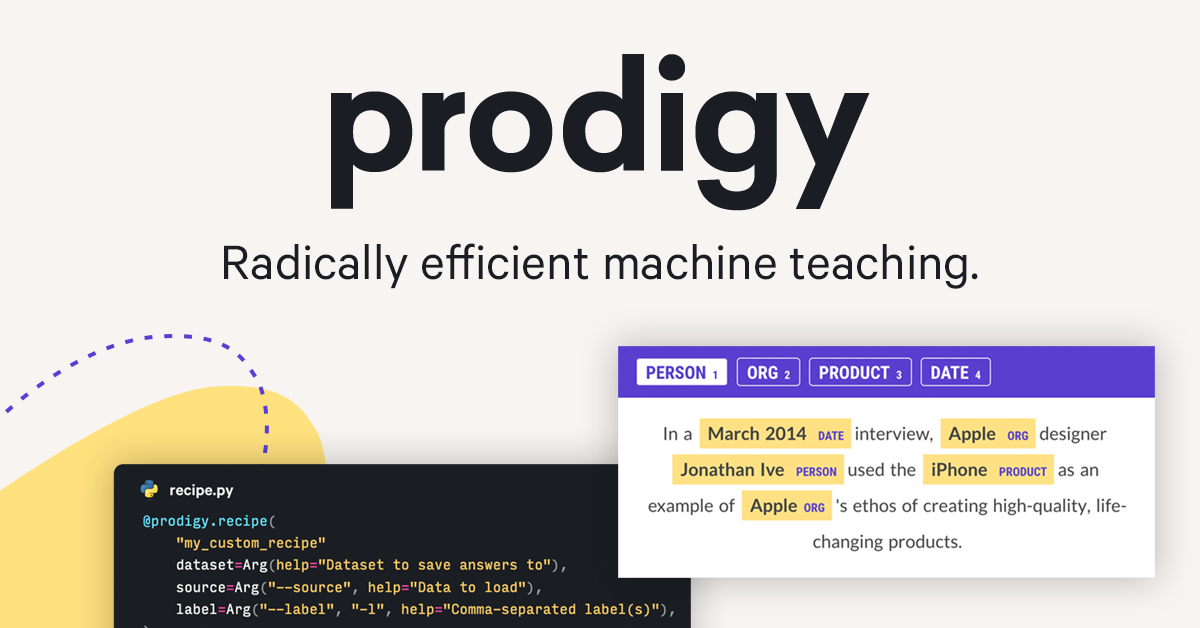
Data Labeling and Annotation Tools form the foundational infrastructure of the modern artificial intelligence stack. This software category covers platforms and utilities designed to transform raw, unstructured data—such as images, video footage, text, audio, and sensor data—into structured, machine-readable datasets required to train supervised machine learning models. The scope of this category encompasses the full lifecycle of the annotation process: data ingestion and sampling, ontology (schema) creation, the actual labeling interface (bounding boxes, polygons, semantic segmentation, named entity recognition), quality assurance (consensus and review workflows), and the final export of structured training data into MLOps pipelines.
In the broader enterprise software ecosystem, Data Labeling & Annotation Tools sit directly downstream from Data Storage (Data Lakes/Warehouses) and upstream from Machine Learning Operations (MLOps) and Model Training platforms. While Data Warehouses focus on storage and MLOps platforms focus on model versioning and deployment, Data Labeling tools bridge the critical gap by converting "data" into "intelligence." This category includes both general-purpose platforms capable of handling multi-modal data and vertical-specific tools engineered for highly specialized environments like medical imaging (DICOM), autonomous driving (LiDAR/3D point clouds), or geospatial analysis.
The primary user base for these tools has evolved from niche data scientists to a diverse array of stakeholders, including Machine Learning Engineers, Product Managers, and specialized annotation workforces (both in-house and outsourced). The core problem these tools solve is the "bottleneck of ground truth." As algorithms become commoditized, the competitive advantage in AI has shifted to the quality and volume of proprietary training data. These tools provide the governance, efficiency, and accuracy mechanisms necessary to produce that data at scale.
History of the Category
The evolution of Data Labeling and Annotation Tools tracks the trajectory of machine learning itself, moving from academic obscurity to enterprise necessity. In the 1990s and early 2000s, data labeling was largely an ad-hoc process. Researchers and early data scientists would manually tag small datasets using custom scripts or basic spreadsheet software. The concept of a dedicated "tool" for annotation was virtually non-existent because the neural networks of the time—shallow and computationally constrained—did not require the massive datasets that define modern AI.
The first major inflection point occurred in the mid-2000s with the launch of crowdsourcing marketplaces like Amazon Mechanical Turk (2005). While not a dedicated labeling tool per se, it introduced the concept of "human intelligence tasks" (HITs) as a scalable resource. This era treated annotators as an API, with crude HTML forms serving as the interface. Quality was notoriously difficult to manage, and the tools were largely built in-house by the requesters.
The true genesis of the modern Data Labeling & Annotation Tools category can be traced to the deep learning boom ignited by the ImageNet competition in 2012. As computer vision models like AlexNet demonstrated the unreasonable effectiveness of large labeled datasets, the demand for sophisticated tooling exploded. Between 2014 and 2018, the market saw the emergence of dedicated SaaS platforms. These vendors professionalized the interface, introducing features like vector-based drawing tools, hotkeys for speed, and basic project management capabilities. This period marked the shift from "crowd management" to "data workflow management."
From 2019 to the present, the market has undergone significant consolidation and specialization. The narrative shifted from "getting data labeled" to "data-centric AI," a philosophy championed by industry leaders emphasizing that model performance is downstream of data quality. We saw the rise of vertical SaaS—tools specifically built for medical imaging or autonomous vehicles—and the integration of "model-assisted labeling," where AI models themselves perform the first pass of annotation. Today, the category is defined by heavy automation, integration with the broader MLOps stack, and enterprise-grade security, responding to a market where, according to [1], the global data collection and labeling valuation is projected to surge significantly by 2030.
What to Look For
Evaluating Data Labeling & Annotation Tools requires a discerning eye for both technical capability and operational workflow. The most critical evaluation criterion is annotation efficiency versus accuracy. High-quality tools offer model-assisted labeling features—such as SAM (Segment Anything Model) integrations for images or large language models for text—that can reduce manual labor by 50-80%. However, buyers must rigorously test these features to ensure they do not bias the annotator or lower the bar for quality control.
Quality Control (QC) mechanisms are the differentiator between a toy and an enterprise platform. Look for "consensus" or "blind double-entry" features, where multiple annotators label the same asset, and the software automatically flags discrepancies for a senior reviewer. A robust tool will calculate Inter-Annotator Agreement (IAA) scores in real-time, allowing you to identify underperforming workers or ambiguous ontology definitions instantly.
Red flags in this category often masquerade as features. Be wary of vendors who bundle proprietary workforce services with their software but refuse to allow you to bring your own labelers (BYOL). This "black box" labor model often hides poor working conditions and subpar quality. Another warning sign is data lock-in: ensure the platform supports open import/export standards (like COCO, Pascal VOC, or JSON) and does not hold your metadata hostage in a proprietary format.
Key questions to ask vendors include: "How does your platform handle ontology versioning if we change our label definitions mid-project?" "Can we deploy your software within our own Virtual Private Cloud (VPC) to meet data residency requirements?" and "What specific active learning capabilities do you offer to help us prioritize which data to label first?"
Retail & E-commerce
In the retail sector, Data Labeling & Annotation Tools are the engine behind visual search, inventory management, and personalized recommendations. The primary use case here is computer vision for product recognition. Retailers require tools that can accurately draw bounding boxes around thousands of SKUs in varied lighting conditions to train checkout-free systems or smart shelves. According to NielsenIQ, out-of-stocks cost retailers billions annually [2]; annotation tools are critical in training the shelf-monitoring AI that mitigates this loss. Evaluation priorities should focus on the tool's ability to handle high-density image annotation (hundreds of objects per image) and hierarchical labeling (e.g., "Beverage" > "Soda" > "Coke" > "Diet Coke"). Unique considerations include the need for attribute tagging (color, pattern, neckline) for fashion e-commerce, which requires a flexible and customizable interface.
Healthcare
Healthcare presents the most rigorous demands for data labeling, primarily centered on medical imaging (Radiology and Pathology). Tools in this space must natively support DICOM (Digital Imaging and Communications in Medicine) and NIfTI file formats and provide multi-planar reconstruction (MPR) viewers. Unlike retail, where a layperson can identify a shoe, healthcare annotation requires deep domain expertise. Therefore, the tool must facilitate collaboration between data scientists and doctors. [3] notes that accurate labeling is essential to reducing diagnostic errors. Security is paramount; HIPAA and GDPR compliance are non-negotiable deal-breakers. Buyers must verify that the tool allows for on-premise deployment or strict PII (Personally Identifiable Information) masking to ensure patient data never leaves the secure environment.
Financial Services
For financial institutions, the focus shifts to Natural Language Processing (NLP) and Optical Character Recognition (OCR). Use cases include extracting data from invoices, classifying transaction descriptions for fraud detection, and sentiment analysis of market news. According to IDC, security, privacy, and trust are top AI initiatives for companies [4]. Consequently, financial buyers prioritize tools with granular role-based access control (RBAC) and audit trails. A unique consideration is "entity linking" capabilities—the ability to not just tag a company name in a document but link it to a specific entry in a corporate database. Redacting sensitive financial information automatically before it reaches human annotators is a critical feature to look for.
Manufacturing
Manufacturing relies heavily on annotation for defect detection and robotics automation. In these environments, data often comes from non-standard sensors, such as thermal cameras or 3D LiDAR for factory robots. The ability to label 3D point clouds and fuse data from multiple sensors (e.g., matching a 2D image defect to a 3D location) is a key differentiator. Deloitte reports that 28% of manufacturers are prioritizing vision systems for investment [5]. Tools must be able to handle "rare event" workflows, where the vast majority of data is normal (non-defective), and the UI must allow annotators to quickly scan and dismiss normal frames while applying precise polygon masks to the rare defects (scratches, dents).
Professional Services
In legal, consulting, and insurance, the dominant use case is Intelligent Document Processing (IDP). Law firms and consultancies use annotation tools to train models that review contracts, extract clauses, and summarize long documents. The "needle in a haystack" problem is prevalent here; users need tools that support long-document annotation without performance lag. A critical evaluation metric is the tool's support for "relation extraction"—defining how two entities in a text (e.g., a "Lessor" and a "Lease Date") interact. Unlike other industries, professional services often require subject matter experts (lawyers, accountants) to do the labeling, so the User Experience (UX) must be intuitive enough for non-technical users who bill by the hour.
Subcategory Overview
Data Labeling & Annotation Tools for Contractors
This subcategory caters specifically to independent contractors, freelancers, and gig-economy workers who perform annotation tasks, or the agencies that manage them. What makes this niche genuinely different from generic enterprise tools is the focus on workforce management and individual productivity metrics. While a general platform emphasizes dataset health, tools for contractors emphasize "task throughput" and "earnings visibility."
One workflow that ONLY this specialized tool handles well is the micro-tasking and payment reconciliation loop. These tools often include built-in time tracking, granular task history, and automated invoicing features that allow a contractor to prove their work and get paid per task or per hour. A generic tool typically lacks these financial and administrative layers, assuming the user is a salaried employee.
The specific pain point driving buyers toward this niche is the administrative burden of managing freelance work. Contractors often struggle with tools that have opaque quality scoring or unreliable task queues. Tools in this category provide transparency on "acceptance rates" (how often their work is rejected) and ensure a steady stream of tasks, which is critical for their livelihood. For a deeper analysis of the features that empower this workforce, see our guide to Data Labeling & Annotation Tools for Contractors.
Data Labeling & Annotation Tools for Marketing Agencies
Marketing agencies require annotation tools that excel in multi-tenant brand management and creative asset analysis. Unlike general tools designed for engineering teams, these platforms are built to handle visual sentiment analysis, logo detection in social media streams, and product placement tracking. The key differentiator is the ability to segregate data logically by "Client" or "Campaign," ensuring that Brand A's data never bleeds into Brand B's project.
A workflow unique to this niche is social listening sentiment tagging. While generic NLP tools can tag "positive" or "negative," marketing-specific tools allow agencies to define nuanced brand-specific ontologies—such as tagging sarcasm, brand affinity, or specific purchase intent signals within user-generated content. General tools often lack the flexibility to handle these subjective, context-heavy cultural nuances.
The pain point driving agencies here is the need for client-facing reporting. General tools export JSON files for engineers; marketing agency tools often provide dashboards and visual summaries of the annotated data (e.g., "80% of images containing our logo also contained a smile") that can be included directly in client presentations. To explore tools that support these high-stakes creative workflows, visit Data Labeling & Annotation Tools for Marketing Agencies.
Data Labeling & Annotation Tools for Digital Marketing Agencies
While similar to general marketing agencies, Digital Marketing Agencies have a distinct need for performance-driven data tagging. This niche focuses on structured data related to ad performance, click-through rates (CTR), and conversion optimization. These tools are distinct because they often integrate directly with ad-tech platforms (Google Ads, Meta Ads) to tag ad creatives with performance attributes (e.g., "text-heavy," "blue background," "human face present").
One workflow that ONLY this specialized tool handles well is the creative performance loop. An agency can tag thousands of historical ad creatives with specific visual attributes and correlate those tags with performance data to train a predictive model for future ad success. General annotation tools do not ingest performance metrics, making this correlation impossible without complex external data engineering.
The specific pain point here is Creative Fatigue analysis. Digital agencies need to know why an ad is failing. Is it the color scheme? The call to action? Tools in this subcategory allow for the rapid, granular tagging of creative elements to answer these questions with data, rather than intuition. For insights into tools that bridge the gap between creative and analytics, read our guide on Data Labeling & Annotation Tools for Digital Marketing Agencies.
Integration & API Ecosystem
In the modern data stack, a Data Labeling tool that operates in isolation is a liability. The primary deep dive here is into the API ecosystem and webhooks that connect labeling workflows with data storage (AWS S3, Azure Blob, Google Cloud Storage) and downstream MLOps platforms (Databricks, SageMaker, Vertex AI). A robust API should not just support data import/export but allow for programmatic project creation, user management, and real-time task allocation. According to Gartner, by 2026, 80% of enterprises will have integrated generative AI APIs or models into their environments [6]; labeling tools that cannot seamlessly feed these pipelines will become obsolete.
Consider a scenario involving a 50-person professional services firm specializing in real estate document processing. They attempt to connect a standalone labeling tool to their invoicing system and a custom model training pipeline. If the labeling tool’s API lacks support for "webhooks on task completion," the firm’s engineers must write a polling script that constantly checks for new labels, wasting compute resources and creating latency. Worse, if the integration does not support schema versioning, a simple change in the labeling interface (e.g., adding a "Duplex" tag) could break the downstream ingestion script, halting the training pipeline for days. Effective tools act as a transparent layer, pushing JSON or XML payloads automatically to the next stage the moment a review is passed.
Expert analysis from Forrester suggests that as AI becomes "agentic," the interoperability between these systems will define success [7]. Buyers must verify that the tool offers a Python SDK (Software Development Kit) and robust documentation, enabling their data engineers to treat labeling as code.
Security & Compliance
Security in data labeling is not just about passwords; it is about Data Sovereignty and Chain of Custody. This section covers the necessity of SOC 2 Type II certification, HIPAA compliance for healthcare, and TISAX for automotive. A critical, often overlooked aspect is the "air-gapped" or on-premise deployment capability for highly sensitive data. IDC research indicates that data sovereignty and privacy are top concerns for 42% of companies adopting AI [4].
Imagine a scenario with a mid-sized fintech company developing a fraud detection algorithm using real customer bank statements. They hire a labeling vendor that claims to be secure but uses a multi-tenant cloud architecture where the data resides on shared servers in a different legal jurisdiction. If a misconfiguration occurs—a common issue in cloud storage—customer PII (names, account numbers) could be exposed to other tenants or leaked publicly. The fallout would not just be reputational; regulatory fines under GDPR or CCPA could bankrupt the firm. A properly secured tool would offer a Private VPC deployment, ensuring the data never leaves the fintech's own controlled cloud environment, and would provide granular audit logs showing exactly which annotator viewed which document and for how long.
As noted by Broadcom, sovereign AI and control over data placement are becoming non-negotiable for enterprises [8]. Buyers must demand proof of penetration testing and ask specific questions about how data is encrypted both in transit and at rest.
Pricing Models & TCO
Pricing in the data labeling market is notoriously opaque and variable. The three dominant models are Per-Label/Per-Task, Hourly/Staffing, and SaaS Platform Licensing (Seat-based). The Total Cost of Ownership (TCO) calculation must include not just the vendor fees but the internal management time and the cost of rework due to poor quality. Market analysis suggests that complex labeling tasks, such as medical imaging, can cost 3 to 5 times more than standard bounding boxes [9].
Let’s walk through a TCO calculation for a hypothetical 25-person team building a computer vision model for retail shelf analysis. They need to annotate 100,000 images with an average of 20 objects per image.
Option A (Per-Label): At $0.05 per bounding box, the cost is $0.05 * 20 * 100,000 = $100,000. This is predictable but expensive at scale.
Option B (SaaS + Internal Team): The software costs $50/seat/month. For 25 annotators over 3 months, software cost is $3,750. However, you must pay the annotators. If they earn $15/hour and can do 10 images/hour, the labor cost is (100,000 images / 10 images/hr) * $15/hr = $150,000. Total TCO: $153,750.
Option C (SaaS + Automation): A premium tool with AI-assisted labeling costs $200/seat/month ($15,000 total). But the AI boosts throughput to 40 images/hour. Labor cost drops to (100,000 / 40) * $15 = $37,500. Total TCO: $52,500.
This scenario illustrates that the "expensive" software often yields the lowest TCO by drastically reducing labor hours.
Buyers should be wary of "hidden" costs such as storage fees for hosting data on the vendor's cloud or premium charges for exporting data in specific formats. Always model the TCO based on throughput, not just list price.
Implementation & Change Management
Implementing a new Data Labeling tool is rarely a plug-and-play affair; it is a workflow transformation. Successful implementation requires rigorous Change Management to ensure adoption by the annotation workforce and integration with engineering cycles. Gartner reports that 85% of AI projects fail, often due to data quality and management issues rather than the algorithms themselves [10].
Consider a scenario where a large automotive company switches from an in-house legacy tool to a modern commercial platform. The annotation team, accustomed to specific hotkeys and workflows, rejects the new UI because it "feels slower," even though it captures richer metadata. Without a dedicated training phase and a "champion" within the annotation team to advocate for the new features (like auto-segmentation), the project stalls. Productivity drops by 40% in the first month, causing the engineering team to miss their model training window. A successful implementation plan includes a pilot phase with the most vocal annotators, configuration of custom hotkeys to match muscle memory, and a phased rollout where the new tool is used for a single project before a full switch-over.
Experts emphasize that the "human in the loop" is not just a cog but a critical stakeholder [11]. Ignoring their user experience is a recipe for implementation failure.
Vendor Evaluation Criteria
Selecting a vendor is a high-stakes decision. The core criteria must go beyond the feature list to Vendor Viability and Partnership Fit. Can this vendor scale with you if your data volume 10x's overnight? Do they have a roadmap that aligns with your future needs (e.g., support for generative AI RLHF)? Forrester advises that leaders must rethink organization structure and talent adaptation alongside technology [12].
A concrete evaluation scenario involves a "Gold Set" test. A buyer should take a small, representative dataset (e.g., 500 documents) that they have already labeled perfectly (the Gold Set). They send this dataset to three prospective vendors or load it into three trial tools. They measure:
1. Accuracy: How closely did the vendor/tool match the Gold Set?
2. Speed: How long did it take?
3. Edge Case Handling: How did the tool handle the 5 documents that were deliberately ambiguous?
In one real-world case, a buyer found that while Vendor A was cheaper, their tool consistently crashed on files larger than 100MB, a fact that only surfaced during this stress test. Vendor B, though more expensive, handled the load and provided a built-in feedback loop for the ambiguous cases, ultimately winning the contract.
Emerging Trends and Contrarian Take
Emerging Trends (2025-2026): The market is rapidly shifting toward Generative AI-driven auto-labeling. Instead of humans labeling data from scratch, Large Multimodal Models (LMMs) will generate the first pass of labels, turning human annotators into "reviewers" and "auditors." Another trend is the rise of RLHF (Reinforcement Learning from Human Feedback) platforms as a specialized sub-segment, driven by the need to fine-tune LLMs. We also see a convergence of Labeling and Data Curation, where tools help you decide what to label, not just how to label it, effectively filtering out 90% of redundant data before it ever reaches a human.
Contrarian Take: The "Human-in-the-Loop" model as we know it is dying; the future is "Human-on-the-Loop."
Most of the industry obsessively focuses on "pixel-perfect" manual annotation and workforce management. The counterintuitive insight is that labeling volume is becoming a vanity metric. In a world of massive foundation models, you don't need more labels; you need better curation. Businesses investing millions in labeling massive, generic datasets are overpaying and likely degrading their model performance with noise. The smartest teams in 2026 will label 1% of the data they labeled in 2023, but they will spend 10x more time selecting which 1% that is. The value has shifted from "production" to "selection."
Common Mistakes
The most pervasive mistake buyers make is underestimating the complexity of their ontology. Teams often start with vague instructions like "label the cars," only to realize halfway through that half the team is labeling trucks as cars and the other half isn't. This leads to dataset inconsistency that ruins model performance. A related error is ignoring the "change management" of the ontology itself; as business needs evolve, the definitions of labels change, and without version control, the dataset becomes a useless mix of conflicting definitions.
Another critical mistake is optimizing for cost over throughput. As shown in the TCO section, saving pennies on per-label costs often results in a tool that is slow, clunky, and frustrating to use. The result is high annotator churn and a slower time-to-market. Finally, many teams fail to establish a Gold Set early on. Without a definitive "correct" version of the data, quality assurance becomes a subjective argument between reviewers and annotators rather than an objective metric.
Questions to Ask in a Demo
- Ontology Management: "If we change a label definition halfway through a project, how does the platform handle the versioning of existing labels? Can we roll back?"
- Automation: "Can we plug in our own pre-trained model to assist with labeling, or are we forced to use your proprietary models? Is there an extra cost for model-assisted labeling?"
- Quality Control: "Show me exactly how your consensus mechanism works. Can I set different consensus rules for different classes (e.g., 100% review for 'defects', 10% for 'background')?"
- Data Governance: "Can you demonstrate the audit trail for a single data asset? I want to see every user who viewed it, labeled it, or exported it."
- Vendor Lock-in: "Export a project right now into a standard JSON format. I want to see the structure of the metadata to ensure it's not proprietary."
Before Signing the Contract
Before finalizing any agreement, conduct a Security and Compliance Audit. Ensure their SOC 2 report is recent and covers the specific services you are buying. Check the SLA (Service Level Agreement) for uptime, but more importantly, for support response time—if the tool goes down, your entire AI pipeline stalls.
Negotiate on "Throughput" constraints, not just seat counts. Some vendors cap the API calls or bandwidth, which can become a hidden bottleneck. Ensure you have a clear Data Exit Strategy: the contract must explicitly state that you own all the annotations and metadata, and the vendor is obligated to provide a full export upon termination. Finally, check for "Overage" fees. If your project scales unexpectedly, will you be penalized with exorbitant rates, or is there a pre-agreed volume discount path?
Closing
Navigating the complex landscape of Data Labeling & Annotation Tools is critical for the success of your AI initiatives. If you have specific questions about your use case or need a sounding board for your evaluation strategy, I invite you to reach out.
Email: albert@whatarethebest.com